The moment of decision at a crowded deli counter often defines the entire character of your meal. Faced with the choice between a vibrant squeeze of yellow and a textured spread of Dijon, many assume the difference is merely aesthetic or a matter of price point.
This is a significant culinary misconception. In reality, the choice between these two staples is a choice between two entirely different botanical histories and chemical reactions.
Understanding these nuances changes the way you approach your kitchen and, more importantly, how you experience the legendary flavors found at one of the best smoked meat delis in Montreal.
The Root of the Flavor: White Seeds vs. Brown Seeds
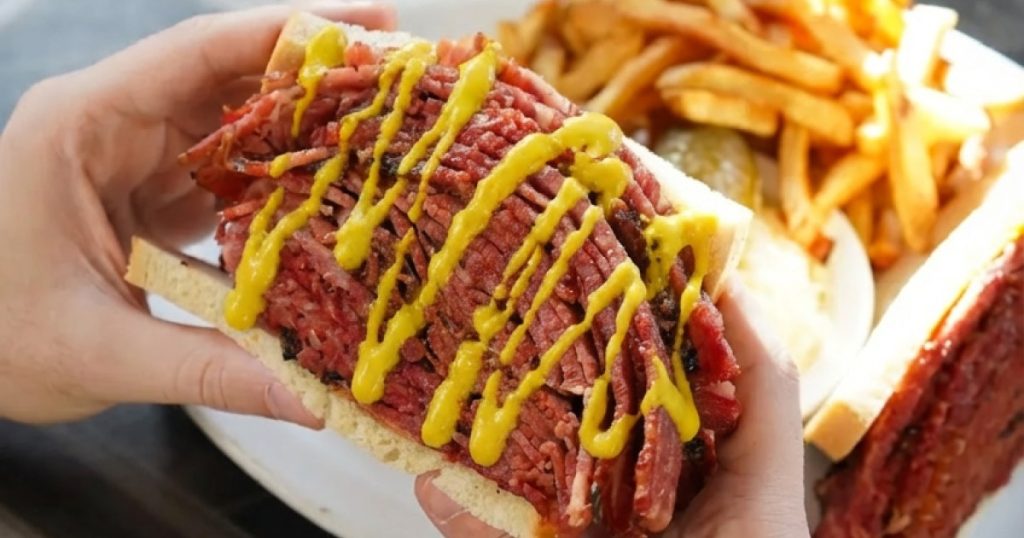
The fundamental divide between Dijon and yellow mustard begins in the soil. Yellow mustard, often referred to as the mild classic, finds its origins in the white mustard seed, known scientifically as Sinapis alba. These seeds contain a compound called sinalbin, which produces a heat that is stable and persistent on the tongue but lacks the aggressive pungency that clears the sinuses. This results in a reliable, mild warmth that serves as a background note rather than a primary highlight.
Dijon mustard takes a more confrontational approach by utilizing brown or black mustard seeds, specifically Brassica juncea. These seeds are packed with sinigrin, a compound that, when crushed and mixed with liquid, releases volatile oils that move through the nasal passages. This creates the signature sharp, spicy kick that defines the Dijon experience. Furthermore, while Dijon relies on the natural oils of the brown seed for its character, yellow mustard depends heavily on the turmeric factor. Turmeric is responsible for that iconic electric yellow hue, providing an earthy undertone that anchors the high acidity of the vinegar.
The Liquid Catalyst: Vinegar vs. Wine
If the seeds are the heart of the condiment, the liquid added to them is the soul. Yellow mustard flavor is defined by its use of distilled white vinegar. This choice creates a sharp, one-note tang that is immediately recognizable. The vinegar acts as a preservative and a stabilizer, ensuring the mild heat of the white seeds remains consistent over time. The result is a smooth, thick paste that is highly predictable and punchy.
In contrast, Dijon mustard embraces the sophistication of verjuice, the juice of unripe grapes, or white wine. This traditional French method introduces layers of complexity and savory depth that vinegar simply cannot match. The lower acidity of wine allows the enzymes in the brown seeds to act more aggressively, creating a thinner, creamier consistency that feels luxurious on the palate.
This difference in liquid is why Dijon feels like a complex sauce while yellow mustard feels like a bright, acidic seasoning.
The Deli Masterclass: Which One for Which Sandwich?
Choosing the best mustard for deli sandwiches requires an understanding of how these flavor profiles interact with different proteins. Yellow mustard is the undisputed champion when it comes to cutting through fat. Its high-vinegar snap is the essential pairing for ballpark-style hot dogs, burgers, and simple deli meats like bologna or domestic ham. It also serves as the perfect acidic base for creamy side dishes like potato or macaroni salad, where its brightness prevents the mayonnaise from feeling too heavy.
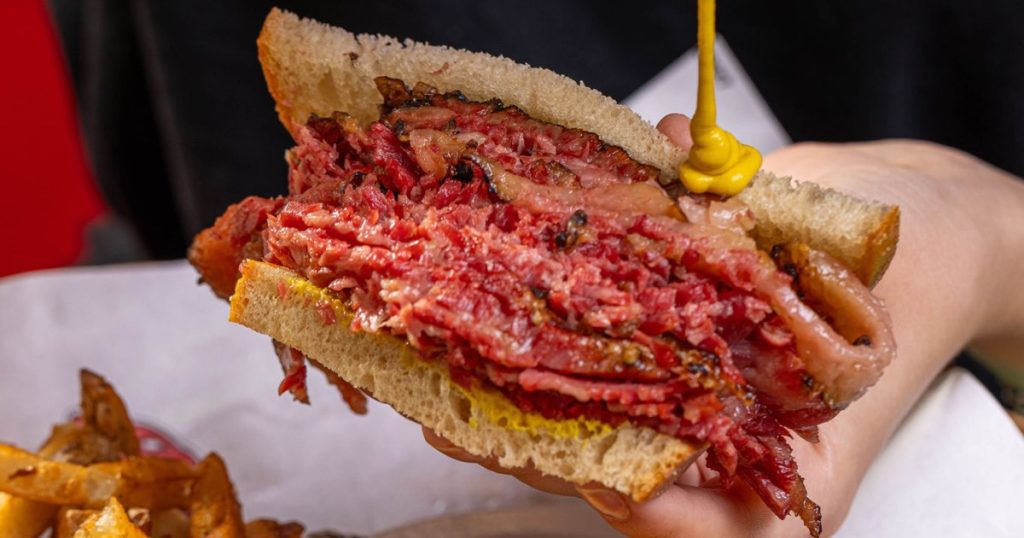
When you transition to more robust, spice-heavy meats, the conversation shifts. Standing up to the heavy peppercorns and coriander of Montreal smoked meat and mustard pairings requires the aromatic strength of Dijon. The heat of the brown seeds complements the smoke rather than fighting against it
Furthermore, Dijon is the go-to for elevating lighter gourmet options such as roast turkey or chicken salad, where its wine-based complexity adds a touch of elegance. Professionals also keep a jar nearby as a chef’s secret; because of its unique protein structure, Dijon serves as an incredible binder for dressings, ensuring that oil and vinegar stay perfectly emulsified.
Beyond the Bun: Culinary Versatility
The utility of these condiments extends far beyond the sandwich. Yellow mustard, with its high acidity and turmeric content, makes for an exceptional marinade base for barbecue. It acts as a natural tenderizer for ribs or pulled pork, helping to build a beautiful crust during the smoking process.
Dijon, meanwhile, is prized for its heat stability. If you are whisking a condiment into a hot pan sauce or a glaze for a roast, Dijon holds its flavor profile under high temperatures much better than its yellow counterpart. Whether you are using it to emulsify a vinaigrette or to add a kick to a cheese sauce, the science behind Dijon makes it one of the most versatile tools in a cook’s arsenal.
Conclusion
The debate between Dijon and yellow mustard is not about which is superior, but which serves your goal. If you are looking for contrast and a sharp, vinegary punch to brighten a salty snack, yellow mustard is your champion. If you are looking for a complement that adds savory depth and nasal-clearing heat to a complex meal, Dijon is the only choice.
To truly elevate your home-cooked meals and sandwiches, you need a mustard that carries the weight of history and the sharpness of professional-grade ingredients.
Head to your local Costco, Marshalls, or HomeSense to pick up your jar of Dunn’s Famous Dijon Mustard.
FAQs
Q1. Can I substitute Dijon for yellow mustard in recipes?
Yes, but be mindful of the flavor shift. Dijon is significantly spicier and more complex than yellow mustard. If a recipe calls for yellow mustard and you use Dijon, expect a stronger kick and less vinegar-driven tang.
Q2. Why is yellow mustard so much brighter than Dijon?
The vibrant color of yellow mustard comes from the addition of turmeric. Dijon is typically a pale, creamy tan or grey-yellow because it relies on the natural color of crushed brown mustard seeds and white wine.
Q3. Does Dijon mustard expire faster than yellow mustard?
Both have long shelf lives due to their acidity, but Dijon is more prone to losing its characteristic heat over time. For the best pungent flavor, try to use your jar of Dijon within six months of opening.
Q4. Which mustard is better for weight loss or dieting?
Both are excellent low-calorie options compared to mayonnaise. However, yellow mustard often has zero calories per serving, while Dijon may have five to ten calories due to the wine or grape juice content.
Q5. Is Dijon mustard always spicy?
While Dijon is inherently spicier than yellow mustard due to the brown seeds used, the heat level can vary between brands. Dunn’s Famous Dijon offers a balanced, professional-grade kick that enhances food without overpowering it.