Most people think a sandwich is just a quick assembly of bread and protein. They are wrong. When you walk into a legacy deli in Montreal, the air is thick with a scent that has been a century in the making. It is a humid, peppery perfume of garlic and maple wood smoke.
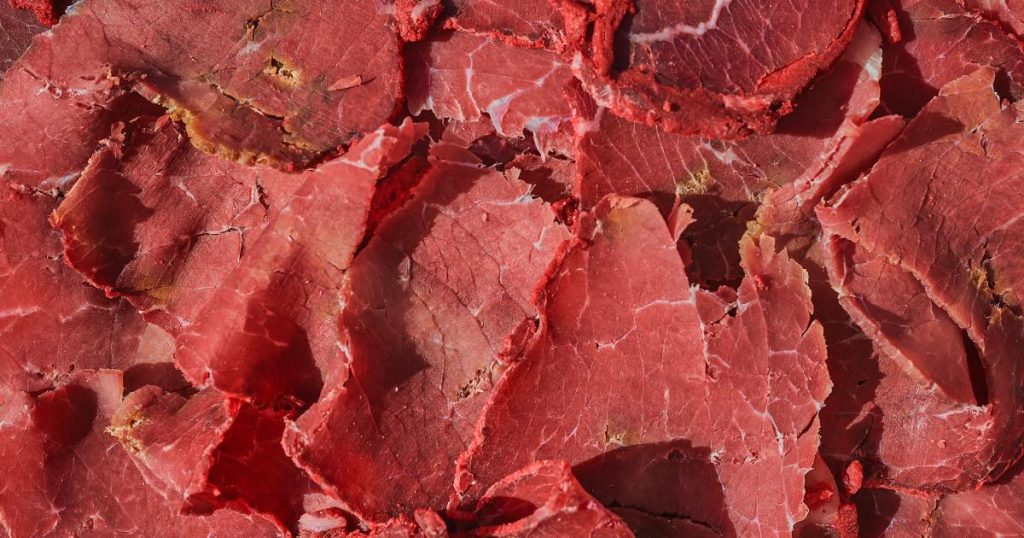
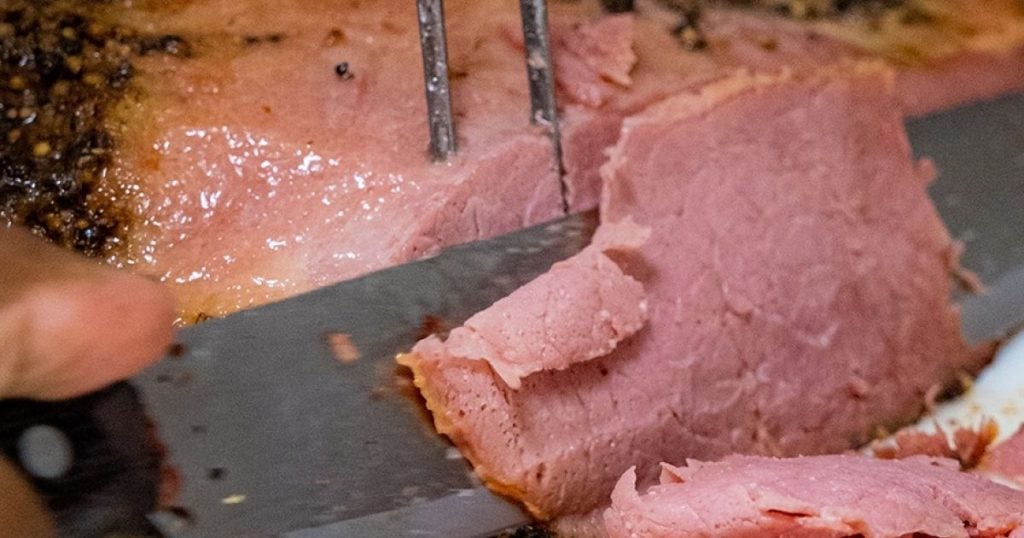
Behind the counter, a man with a steady hand and a sharp knife carves a slab of beef that began its journey to your plate nearly two weeks ago. This is not fast food. This is a slow-motion miracle of chemistry and heritage.
If you want to understand the soul of this city, you have to understand why the clock is the most important tool in the kitchen.
Why Montreal Smoked Meat Cannot Be Rushed
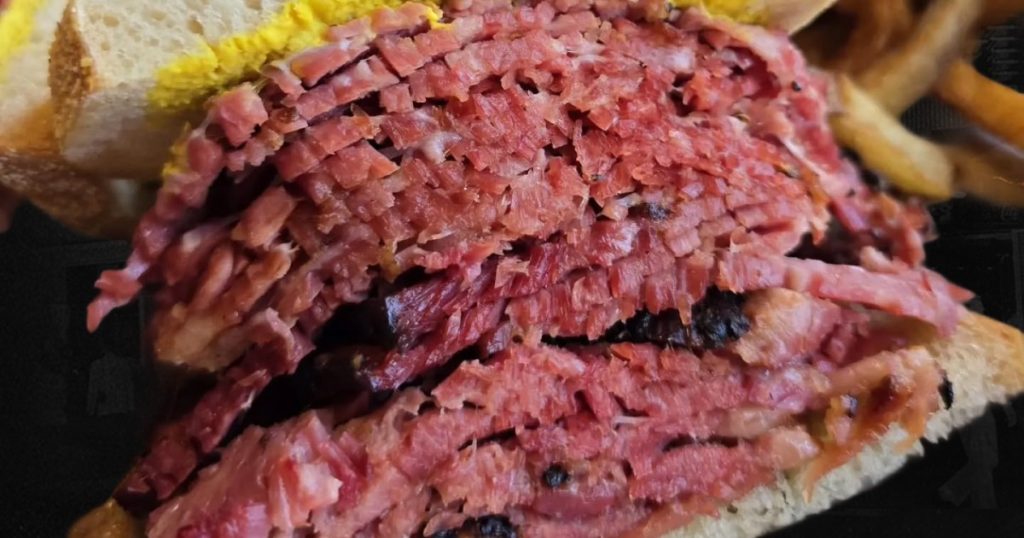
The secret begins with the cut. We are talking about the brisket, a hardworking muscle that supports the massive weight of a cow. It is packed with tough connective tissue and dense fibers that would be completely inedible if treated like a steak. Montreal smoked meat preparation is essentially a long-form negotiation with the anatomy of the animal.
To transform this stubborn muscle into something that melts against the roof of your mouth, you need time. You are waiting for a specific thermal breakdown where the collagen dissolves into silky, rich gelatin. This process is not a linear path; it is a slow crawl. If you rush the heat, the fibers seize up like a fist, locking the moisture inside and then squeezing it out until you are left with a dry, grey disaster.
What Happens if Montreal Smoked Meat is Cooked Fast
Impatience is the enemy of the deli. When you attempt smoked meat slow-cooking at a high temperature, you face a total structural failure of the meat. High heat causes the muscle proteins to denature too quickly, resulting in a rubbery, bouncy texture that feels more like a tire than a delicacy.
Furthermore, the iconic spices, the coarse black pepper, the cracked coriander, and the pungent garlic, require a gentle heat to release their essential oils without burning. Fast-cooking chars the exterior rub, turning it bitter and acrid before the center of the brisket has even begun to warm. You lose the meat butter, that precious rendered fat that gives the sandwich its legendary mouthfeel. Instead of a masterpiece, you get a dry, burnt, and unchewable shadow of the real thing.
The 10-Day Rule: Why Curing is Non-Negotiable
Before the meat ever sees a flame, it must undergo the cure. In Montreal, we don’t use the wet brines common in New York pastrami. We use a dry rub of salt and spices that sits on the meat for at least ten days. This is one of the most vital Montreal smoked meat cooking tips: the first ten days are an absolute necessity.
Why ten days? Because salt moves through meat at a glacial pace, roughly one inch per week. If you cut the process short, the salt and spices only penetrate the outer layer. The result is a brisket with a seasoned exterior but a bland, uncured, and grey center. The cure is also what provides that deep, ruby-red color.
Without the full ten days, you lose the chemical reaction that preserves the meat and develops that complex, fermented tang that defines the Montreal profile.
The Long Journey to the Perfect Bark
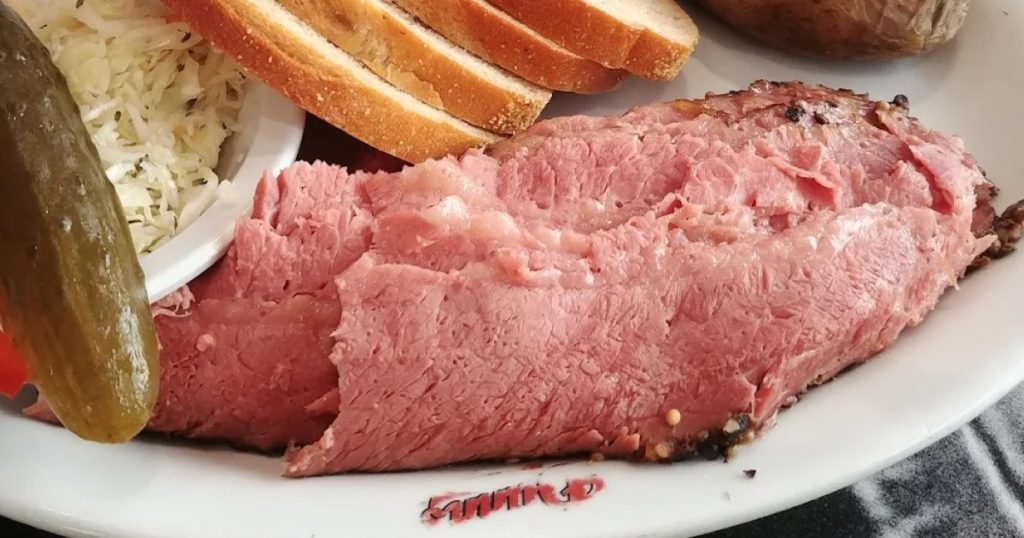
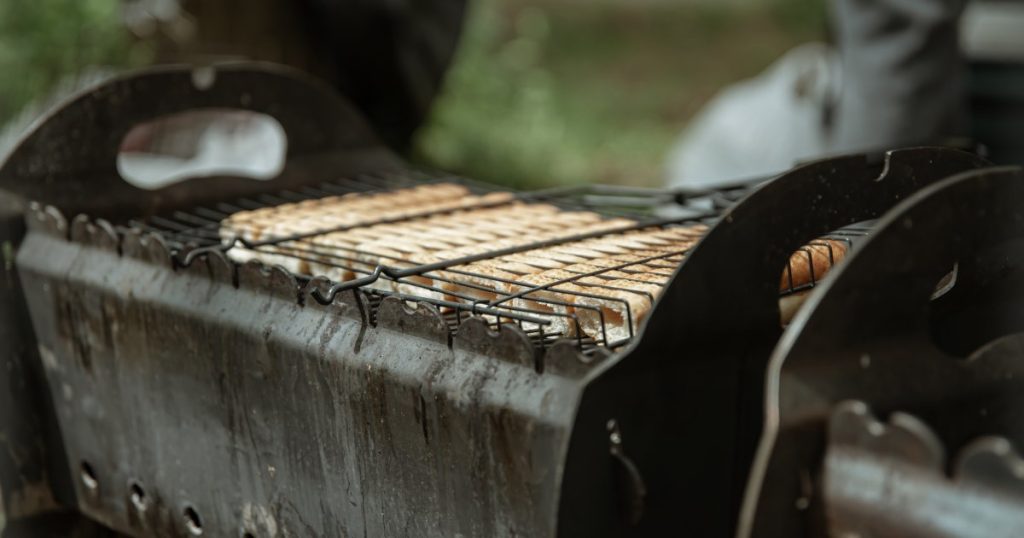
Once the cure is complete, the meat enters the smokehouse. Why does smoked meat take time? Because we are aiming for the bark. Using maple wood or charcoal, the pitmaster maintains a low, steady temperature between 200 and 225 degrees Fahrenheit for up to nine hours.
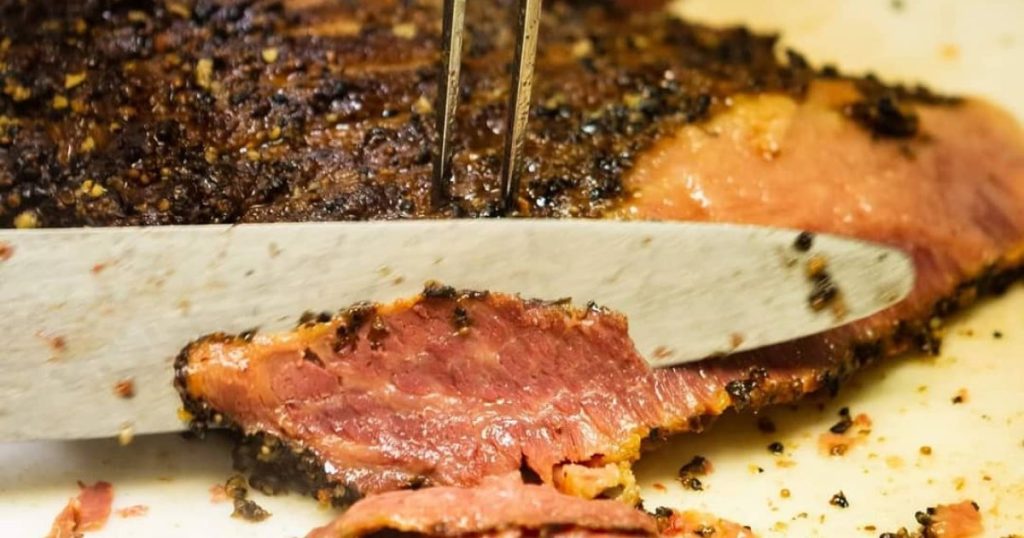
The bark is the mahogany crust that forms on the outside of the brisket. It is a complex interaction between the dry rub, the smoke particles, and the rendering fat. As the smoke circulates, it slowly dehydrates the surface of the meat, concentrating the flavors into a spicy, smoky veneer.
If you increase the heat to speed things up, you don’t get a bark; you get a scorched shell that prevents the smoke from penetrating the deep interior of the meat.
The Crucial Step: The Steam
The meat comes out of the smoker looking beautiful, but it isn’t ready yet. It is still too firm to be sliced for a sandwich. This is where the often-overlooked step of steaming comes into play. For two to three hours, the smoked brisket is bathed in a gentle steam.
This is the final softening. The steam penetrates the bark and re-hydrates the fibers, bringing the internal temperature up to that magic sweet spot of roughly 200 degrees. This is when the fat becomes translucent, and the meat begins to wobble. This step is the difference between a good sandwich and a life-changing one. Steaming ensures that when the knife hits the meat, it falls apart into tender, juicy flakes that hold onto the spice rub rather than crumbling away.
Where to Try the Best Smoked Meat in Montreal
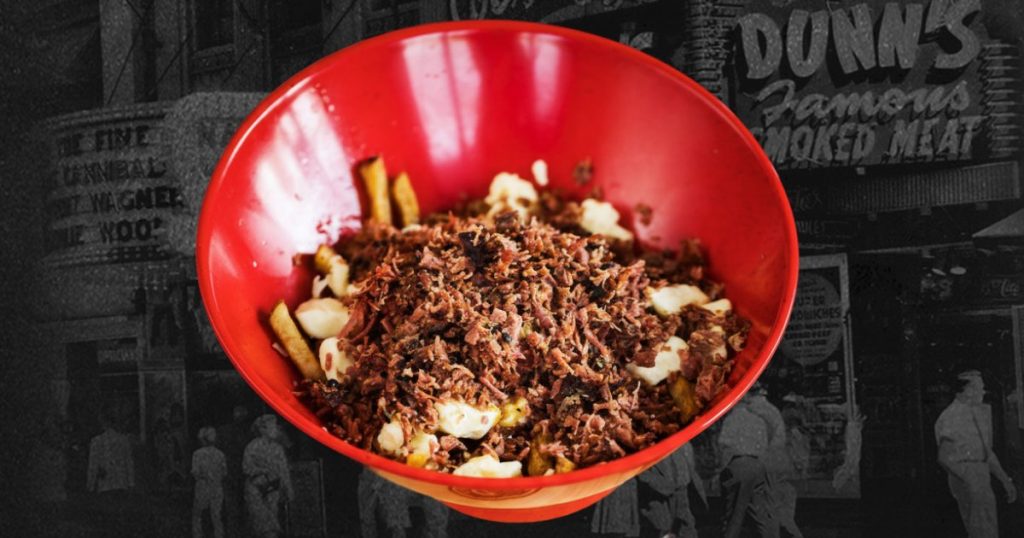
If you are not prepared to spend two weeks in your own kitchen, you must visit the true legendary keepers of the craft. To find the best montreal smoked meat deli, one name stands above the rest for its commitment to tradition: Dunn’s Famous.
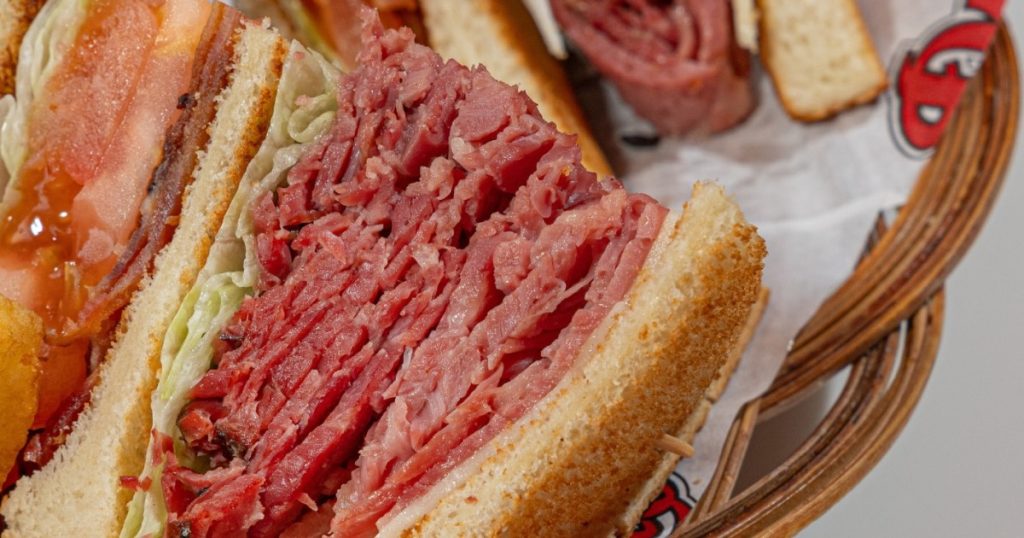
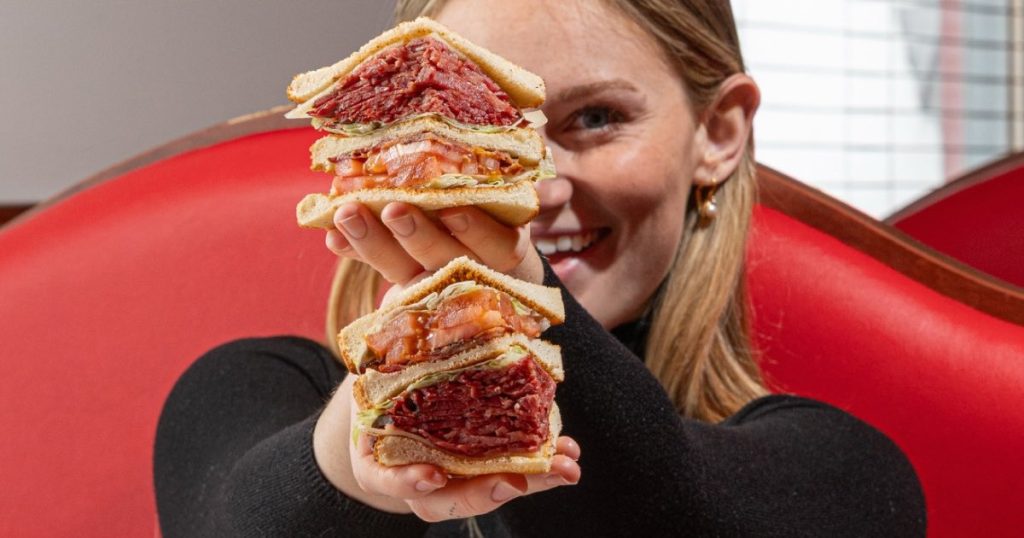
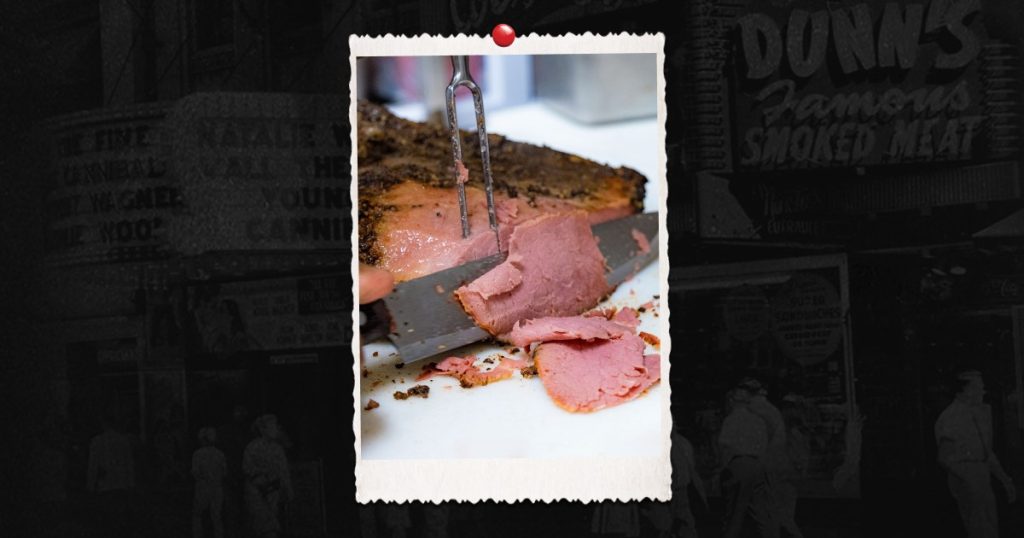
Founded in 1927 by Myer Dunn, this institution has spent nearly a century perfecting the slow-cured process. While others might look for shortcuts, Dunn’s remains dedicated to the old-world techniques that made Montreal a global food destination. Their signature sandwiches are a masterclass in balance, featuring the perfect ratio of spice-crusted bark to tender, hand-sliced brisket. Whether you order it lean, medium, or fat, you are tasting a recipe that has survived the test of time, served in a space that feels like the heartbeat of downtown Montreal.
Conclusion
Montreal smoked meat is a testament to the fact that some things cannot be automated or accelerated. It is a product of human touch, ancient chemistry, and an incredible amount of waiting. From the ten-day cure to the hours of steaming, every minute spent is a deposit of flavor.
To experience the pinnacle of this tradition, head to Dunn’s Famous. Sit in a booth, order a classic medium-fat sandwich with a black cherry cola, and taste for yourself why there is no substitute for the old ways.
Experience the legend tonight at Dunn’s.