Everything You Need to Know About How Montreal Smoked Meat is Made

Millions of people every year search for the secrets behind the Montreal smoked meat tradition because it tastes so different from the standard deli meats you find at the grocery store. It is not just roast beef, and it definitely is not just a New York pastrami clone.
If you are here because you typed how Montreal smoked meat is made into your search bar, you are looking for the real story. You want to know what happens behind those kitchen doors to make a simple brisket taste like a piece of culinary heaven. While the process might seem like magic, it is actually a very specific, time-honored routine that relies on three main things: a secret spice blend, a lot of smoke, and a massive amount of patience.
The Foundation: Selecting the Brisket
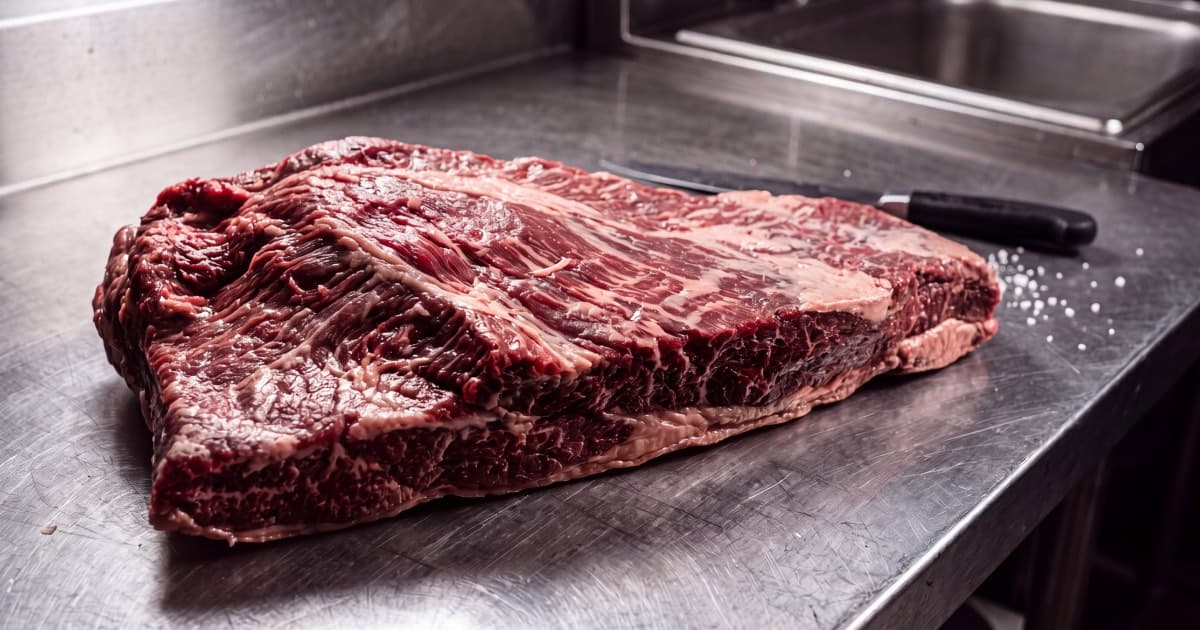
The journey of authentic Montreal smoked meat begins long before the fire is lit. It starts with the selection of the beef brisket. Unlike pastrami, which often uses the navel cut, the Montreal smoked meat process relies on the full brisket. This specific cut is chosen because it contains the perfect ratio of muscle to fat. The fat is crucial, it acts as a self-basting mechanism during the long hours of heat, ensuring that the final product is succulent rather than stringy. Without this marbling, the meat would succumb to the intensity of the smoker and lose its soul.
The Ten-Day Dry Cure
The first true secret of how Montreal smoked meat is made lies in the dry cure. While many commercial meats are injected with liquid brine to speed up the process, the Montreal tradition dictates a dry rub application. A coarse blend of cracked peppercorns, coriander, garlic, mustard seeds, and salt is massaged into the beef.
This meat is then stacked in barrels for a period of eight to twelve days. During this time, the salt draws out moisture, concentrating the beef flavor while the spices penetrate deep into the fibers. The ritual of re-piling the briskets ensures that every side of every cut receives equal attention from the curing agents. This patience is what creates the deep, ruby-red hue and the intense flavor profile that defines the authentic Montreal smoked meat experience.
The Mastery of the Smoke
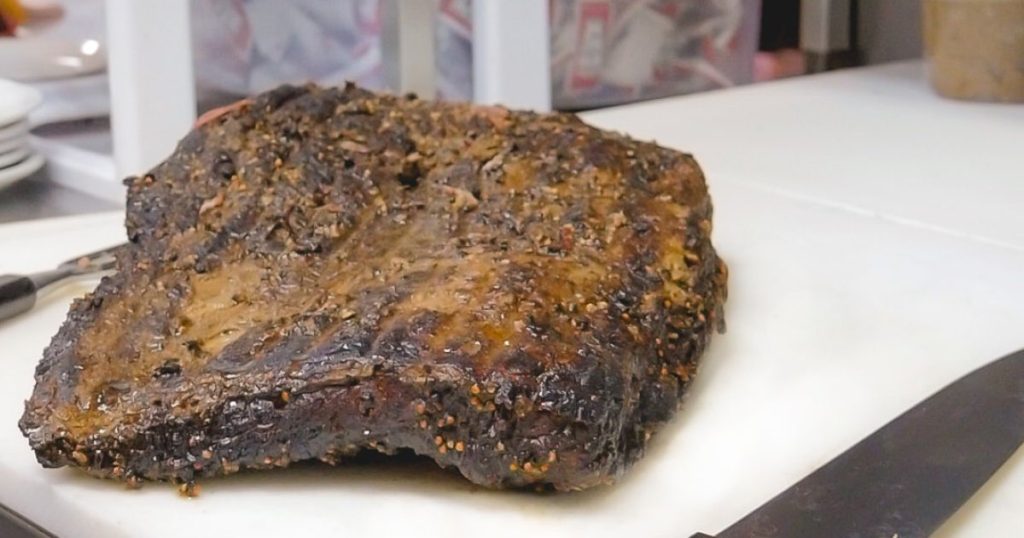
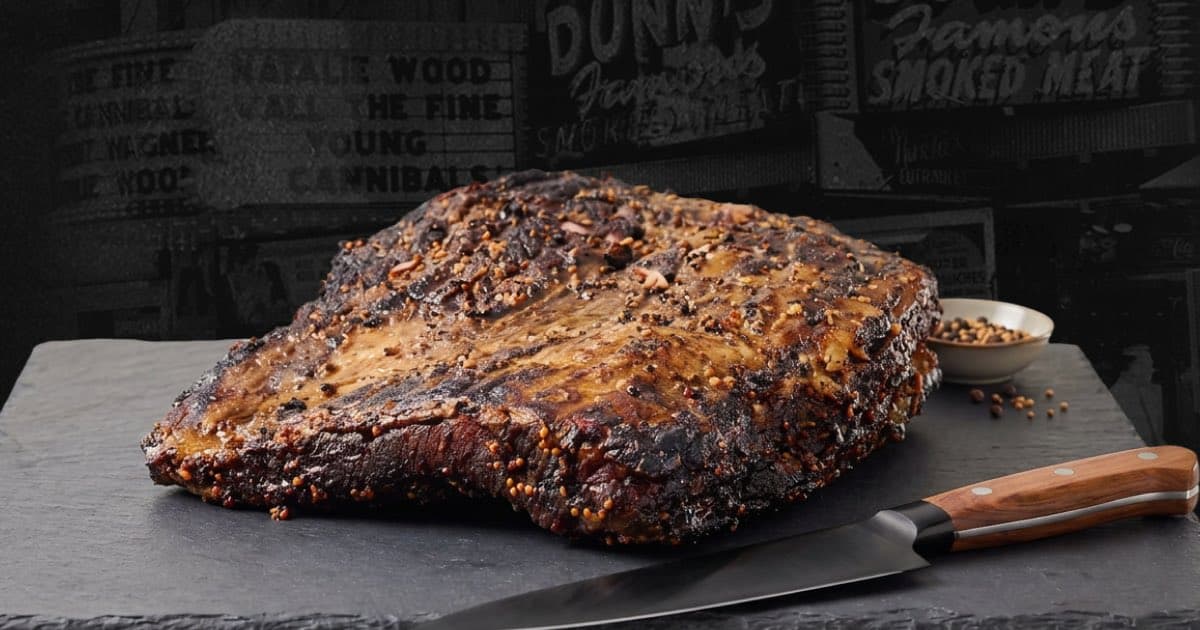
Once the cure is complete, the meat enters the smokehouse. This is where the exterior transformation occurs. Using hardwoods like maple or hickory, the briskets are smoked at low temperatures for several hours. This is not about cooking the meat quickly; it is about building the bark. The smoke clings to the spice rub, creating a dark, mahogany crust that seals in the juices. The aromatic oils from the wood seep into the beef, adding a layer of complexity that no liquid smoke or chemical additive could ever replicate.
The Final Evolution: The Steam
If the smokehouse provides the flavor, the steamer provides the texture. This is the most critical stage in the Montreal smoked meat process. After smoking, the briskets are tough and dense. They are placed into intense steam for two to three hours. This humid environment performs a miracle on the beef, breaking down the tough connective tissues and collagen into silky gelatin. It also serves to desalt the meat slightly, balancing the intensity of the ten-day cure and resulting in a slice of meat that practically dissolves on the tongue.
The Art of the Hand-Cut
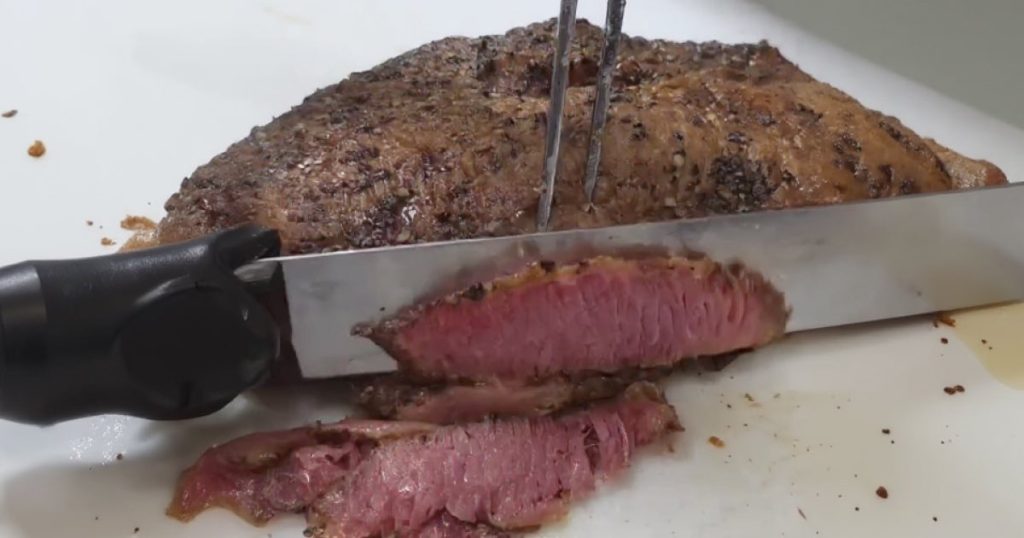
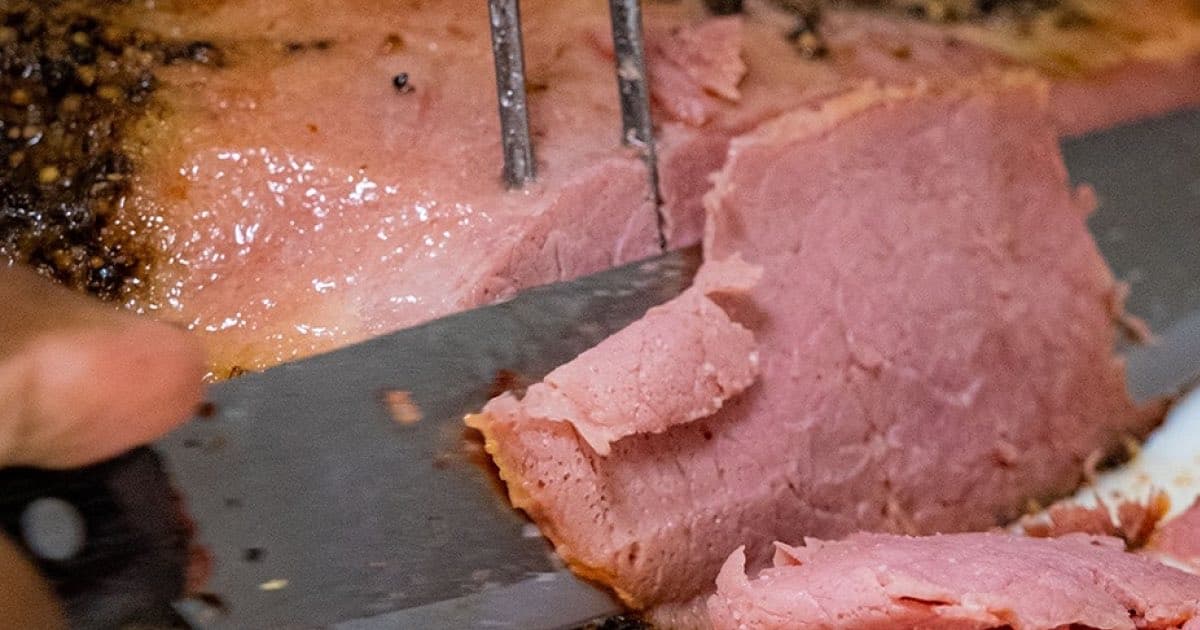
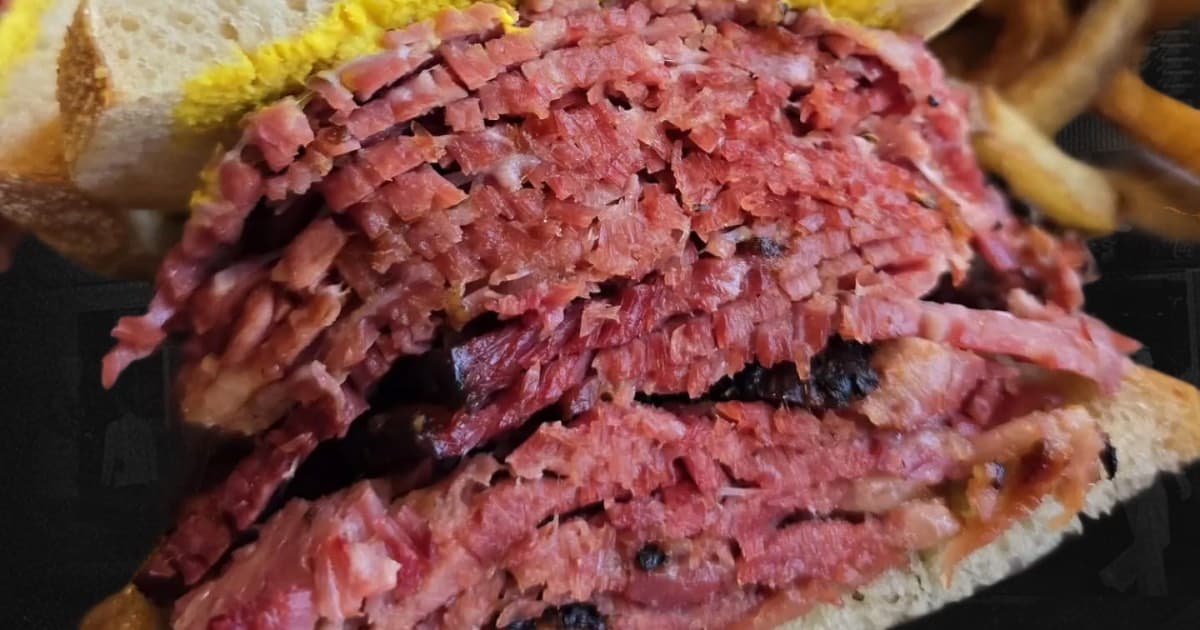
The final step in the tradition is the carving. An authentic sandwich is never subjected to the cold, spinning blade of a mechanical slicer. A master carver uses a long, sharp knife to slice the meat by hand, always against the grain. This preserves the structural integrity of the fibers and ensures that the fat is distributed perfectly across every bite. The customer is given the choice of lean, medium, or old-fashioned fatty cuts, each offering a different perspective on this legendary process.
Conclusion
Understanding the process is one thing, but tasting the result of a century of tradition is where the real magic happens. When you are looking for a place that respects every single step of this painstaking journey, you have to visit a true Montreal institution.
Widely regarded as one of the best smoked meat restaurants in Montreal, Dunn’s Famous has been a cornerstone of the city’s food scene since 1927.
Come and visit us today, your first bite will tell you everything you need to know.
FAQs
1. What is the difference between Montreal smoked meat and New York pastrami?
While both use beef brisket, Montreal smoked meat is dry-cured with more cracked peppercorns and less sugar in the spice rub compared to pastrami. Additionally, Montreal smoked meat typically uses the entire brisket (including the fatty and lean parts), whereas pastrami is often made from the navel end.
2. Why is Montreal smoked meat always steamed?
The smoking process adds flavor and creates a delicious “bark” on the outside, but it can make the meat firm. Steaming is the crucial final step that breaks down the connective tissues, making the brisket tender and succulent enough to be sliced for sandwiches.
3. What are the different “fat levels” you can order?
At traditional delis like Dunn’s Famous, you can customize your sandwich. The standard options are lean (lower fat, firmer texture), medium (the classic choice, a perfect balance of meat and fat), and fatty (the most flavorful and tender).
4. Is Montreal smoked meat gluten-free?
The meat itself is usually gluten-free as the rub consists of salt and spices. However, it is traditionally served on rye bread. If you have a sensitivity, always check with the restaurant regarding their specific spice blend and cross-contamination.
5. How long does the entire process take?
Between the 10–12 day dry-curing stage, the hours in the smokehouse, and the final 3-hour steam, a single brisket can take nearly two weeks to reach your plate.
You May Also Like
 Chef’s Secrets & Tips
Why Home Smoked Meat Never Tastes Quite Like the Deli Version
 Chef’s Secrets & Tips
How to Tell if Your Smoked Meat is Perfectly Cooked: A Temperature Guide
 From Tradition to Table
Why Montreal Has One of the Most Unique Deli Cultures in the World
 From Tradition to Table