What is Deli Meat? A Guide to the Best Options in Montreal
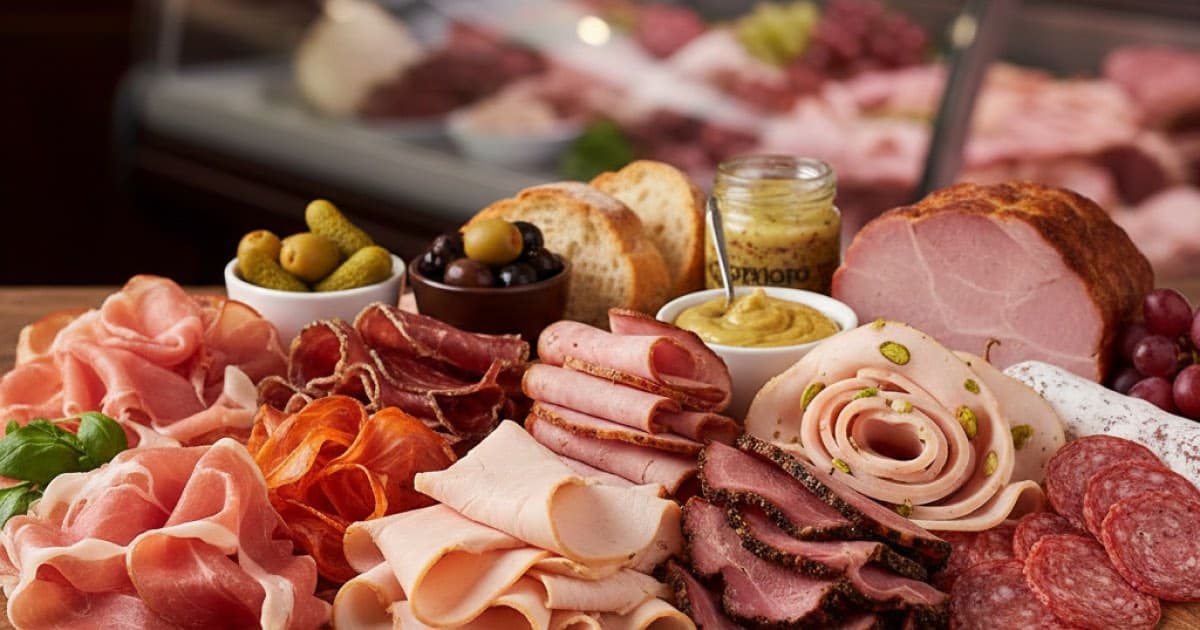

There is something satisfying about a really good sandwich. It’s a staple for a reason, but the experience usually begins and ends with the meat. If you’ve ever found yourself looking at a glass display case, wondering what actually separates a standard slice of ham from a hand-carved brisket, you aren’t alone. Understanding what deli meat is, and how it’s prepared, is the first step toward finding a lunch worth remembering.
In Montreal, we take our deli counters seriously. It isn’t just about convenience here; it’s about a long history of curing, smoking, and seasoning.
This guide covers the basics of the craft and points you toward the best deli restaurant in Montreal to get an authentic taste of the city.
What is Deli Meat?
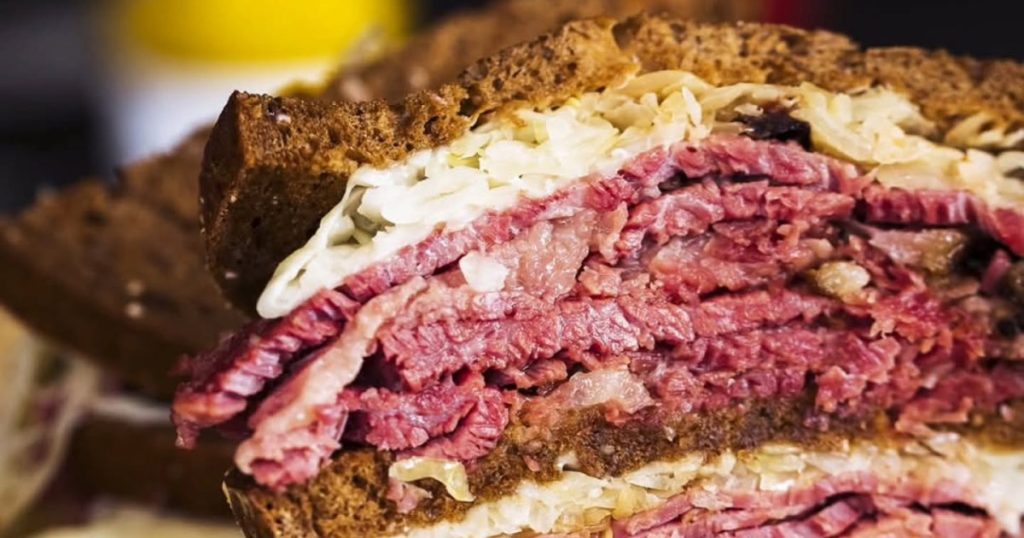
To understand the craft, we must first define the category. So, what is deli meat? At its simplest, deli meat refers to precooked or cured meats that are prepared to be served cold or hot in sandwiches.
While the term covers everything from the pre-packaged slices in the supermarket to the hand-carved briskets in a heritage deli, the methods of preparation vary wildly. High-quality deli meats are often whole-muscle cuts that have undergone a process of brining, curing, smoking, or roasting. These traditional methods not only preserve the meat but also develop complex flavor profiles that you simply cannot find in mass-produced, restructured meat products.
What are the Types of Deli Meats?
The deli counter can be overwhelming. To help you navigate, we can break down the various types of deli meats into four primary categories:
1. Whole Cuts
These are the premium options. They consist of a single piece of meat that has been cooked and sliced.
- Roast Beef: Usually seasoned with salt and pepper and slow-roasted until medium-rare.
- Turkey & Chicken Breast: Oven-roasted or smoked, these are lean, high-protein favorites.
- Ham: Derived from the hind leg of a pig, ham can be honey-roasted, black forest (smoked), or boiled.
2. Cured and Smoked Meats
This category involves salt-curing and aging, which results in much deeper flavors.
- Pastrami: Usually made from the navel end of a brisket, it is brined, seasoned with a spicy rub, and smoked.
- Corned Beef: Similar to pastrami but usually salt-brined and boiled rather than smoked.
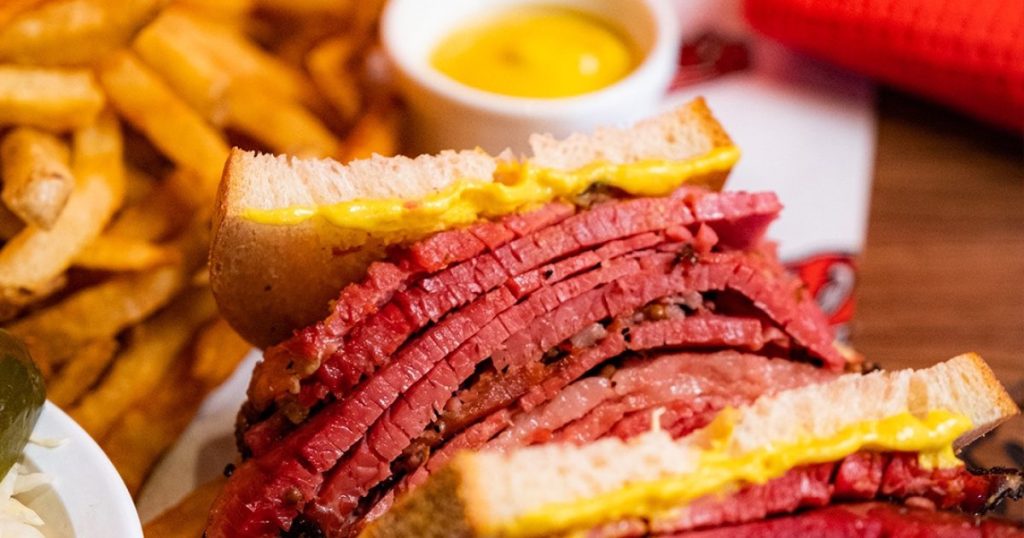
- Montreal Smoked Meat: A unique hybrid that uses the whole brisket and a dry-cure spice rub.
3. Dry-Cured (Charcuterie)
These meats are cured with salt and air-dried for weeks or months. They are intensely salty and savory.
- Prosciutto: Italian dry-cured ham sliced paper-thin.
- Salami: Fermented and air-dried sausage, often seasoned with garlic or peppercorns.
4. Sausages and Loaves
These are emulsified meats, where the meat is ground into a paste before being cooked in a casing.
- Bologna: A derivative of Italian Mortadella.
- Liverwurst: A seasoned meat spread made from pork or beef liver.
The Best Deli Meat to Try in Montreal
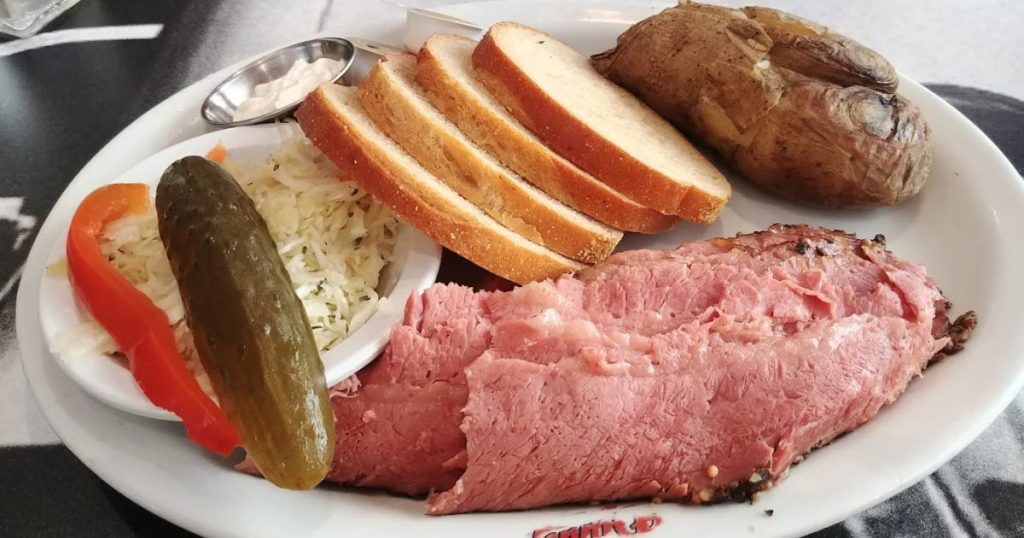
While the list of deli meats is long, there is one undisputed king of the table when you are in Quebec: Montreal smoked meat.
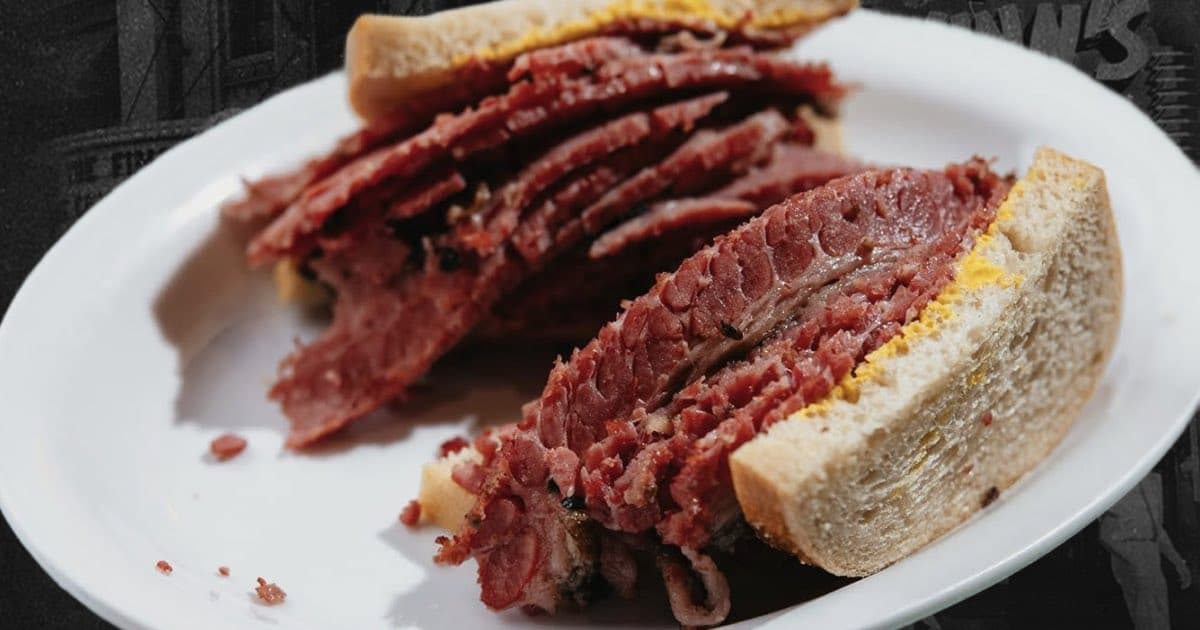
If you are looking for the best deli meat to try in Montreal, this is it. Unlike New York pastrami, which is often sweeter and uses only the navel cut, Montreal smoked meat uses the entire brisket. It is dry-cured with a heavy-handed blend of cracked black pepper, coriander, mustard seed, and garlic.
The secret to its legendary status is the steaming process. After being smoked, the meat is kept in a steamer until it reaches a buttery consistency. When you order it, look for the medium or medium-fat cut. This ensures you get enough of the rendered fat to keep the meat moist while the spices pop against the backdrop of a classic rye bread slice.
The Best Deli Restaurant in Montreal: Where to Eat
Montreal’s deli culture is competitive, but one name consistently rises to the top for quality and tradition: Dunn’s Famous.
Founded in 1927 by Myer Dunn, we are proud to be a living piece of Montreal’s history. While others have turned to automated, liquid-smoke processes to save time, we still adhere to old-world techniques. Our meat is marinated for six days in our secret spice blend before being slow-cooked and hand-sliced to your order.
Beyond our iconic smoked meat, a meal with us is a full experience: the snap of our giant kosher dill pickles, the crunch of our coleslaw, and a side of poutine for the ultimate Québécois tradition.
Conclusion
Understanding the different types of deli meats is about more than just making a better sandwich; it’s about appreciating a culinary craft that spans generations. From the simple roast turkey to the complex, spice-crusted beauty of a smoked brisket, deli meats offer a world of flavor.
If you find yourself in the city, don’t settle for the standard options. Seek out the best deli meat to try in Montreal and head to a legendary spot like Dunn’s Famous to taste history for yourself. Once you’ve had a hand-sliced, steamed-to-perfection smoked meat sandwich on rye, your standard for deli meat will be changed forever.
FAQs
1. What is the main difference between Montreal Smoked Meat and Pastrami?
While both start with brisket, Montreal smoked meat uses the entire brisket and a dry-cure spice rub featuring heavy black pepper and coriander. Pastrami typically uses only the navel cut and is often sweeter.
2. Why is “steaming” so important for deli meat?
Steaming is the secret to the “buttery” texture found in high-end delis. After the meat is smoked, it is kept in a steamer to render the fat and soften the fibers, making it melt-in-your-mouth tender.
3. What does whole-muscle mean at the deli counter?
Whole-muscle cuts are premium options (like roast beef or turkey breast) consisting of a single piece of meat. This is superior to “restructured” meats, which are processed and pressed into shapes.
4. How is Dunn’s Famous different from modern deli chains?
Dunn’s adheres to 1927 traditions, marinating meat for six full days in a secret spice blend and avoiding liquid smoke or automated shortcuts used by mass producers.
5. Which cut should I order for the best experience?
For the most authentic flavor, ask for the medium cut. This ensures enough rendered fat is present to keep the meat moist and carry the flavors of the spices.
You May Also Like
 Know Before You Go
Smoked Meat Sandwich vs Club Sandwich: What Is Actually the Difference?
 Know Before You Go
Where to Get the Best Montreal Smoked Meat According to Reddit
 Know Before You Go
The Ultimate Montreal Food Bucket List for Tourists
 Know Before You Go