What Is Yellow Mustard and Why Do Delis Use It
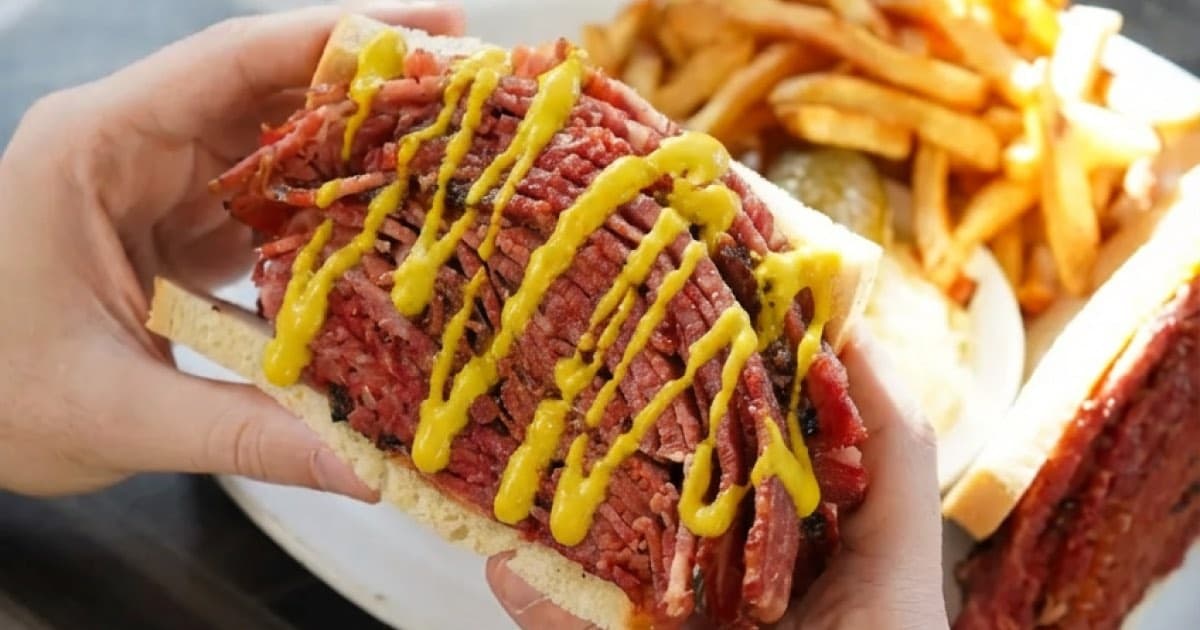

Have you ever stopped to ask why yellow mustard, specifically, is the law when it comes to smoked meat sandwiches?
When you sit down for an authentic Montreal smoked meat experience, there are a few things that never change: the stack of warm, hand-sliced brisket, the marble rye bread, the side of a crunchy dill pickle, and a generous smear of yellow mustard.
It feels like a rule written in stone. But why? Why not Dijon, or honey mustard, or even just a bit of butter? If you’ve ever tried to break the rules by adding something like mayonnaise or Thousand Island dressing, you probably realized pretty quickly why those aren’t on the table.
Let’s discuss the culinary logic behind this iconic spread to understand why it remains the champion of the deli counter.
What is Yellow Mustard?
To understand the dominance of yellow mustard, one must first understand its composition. Yellow mustard is a deceptively simple condiment, but its balance is the result of careful ingredient selection. It is crafted primarily from finely ground white mustard seeds (Sinapis alba). These specific seeds possess a clean, mild heat that is far less volatile than the seeds used in hotter varieties.
This mustard powder is whipped with water, salt, and a generous volume of distilled vinegar. However, the most iconic element is the inclusion of turmeric. Beyond giving the mustard its signature neon glow, turmeric adds a subtle, earthy base note that anchors the sharpness of the vinegar. This combination creates one of the most recognizable classic deli condiments in the world, a sauce that is as much about texture and acidity as it is about spice.
How Yellow Mustard Elevates Smoked Meat Sandwich
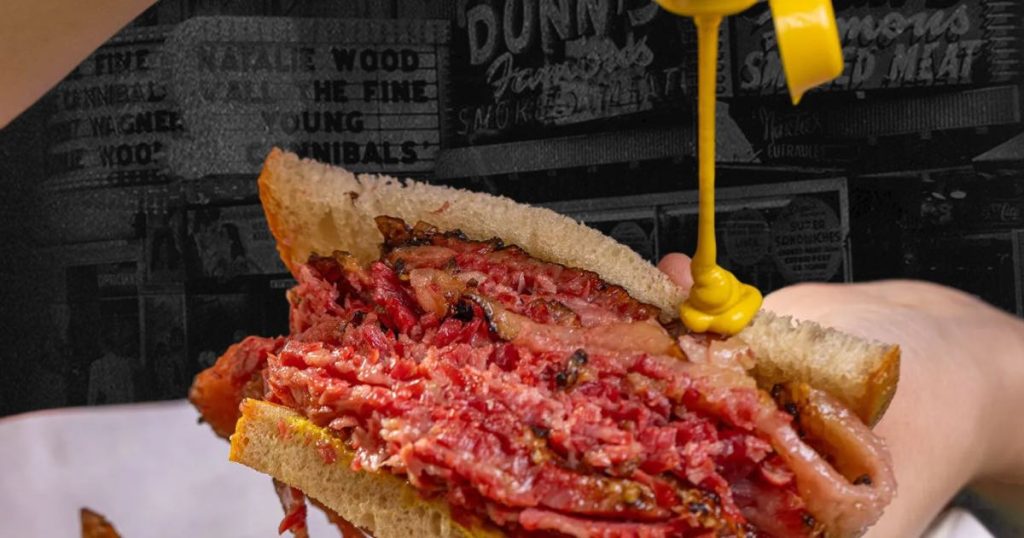
It isn’t just a habit that keeps the yellow bottle on the table; it is a fundamental rule of gastronomy. Traditional deli meats, particularly brisket-based smoked meat, are incredibly rich. They are heavily marbled with fat and cured with a complex blend of peppercorns, coriander, and garlic.
The primary reason why delis use yellow mustard is to provide a palate reset. Fat is delicious, but it is also heavy. As you eat a sandwich, the rendered fats from the meat coat your tongue, eventually dulling your ability to taste the nuances of the spices. The high acetic acid content in the vinegar of the mustard acts as a chemical fat cutter. It strips that oily film from your taste buds with every bite, ensuring that the tenth mouthful of smoked meat tastes just as vibrant as the first. Also, it acts as the perfect mustard for smoked meat because its bright tang sits on top of the flavor profile, highlighting the smoky notes rather than competing with them.
Historical Roots of Yellow Mustard as Smoked Meat Sandwich Base
The marriage of yellow mustard and the deli sandwich was born out of both necessity and cultural tradition. In the late 19th and early 20th centuries, many urban delis were Kosher-style establishments. Because Kosher dietary laws strictly forbid the mixing of meat and dairy products, common European sandwich spreads like butter or mayonnaise were completely off-limits.
Mustard emerged as the perfect solution. It provided the creamy, spreadable moisture needed to keep the rye bread from feeling dry, but it was entirely neutral in terms of religious dietary laws. It required no refrigeration in its early days and was incredibly affordable for immigrant business owners. Over the decades, this practical necessity evolved into a cultural preference. Even as dietary restrictions loosened for some, this specific pairing became the definitive taste of Montreal.
What is the Difference Between Yellow Mustard and Dijon Mustard?
While they may sit next to each other in the pantry, yellow and Dijon mustards serve entirely different masters.
- Seed Selection: Yellow mustard uses the white seed, which is mild and stable. Dijon uses the brown or black mustard seed, which contains a higher concentration of sinigrin, the enzyme that creates an intense, nose-clearing heat.
- The Liquid Base: Yellow mustard is defined by its sharp, aggressive distilled vinegar. Dijon is traditionally made with verjuice (the juice of unripe grapes) or white wine, resulting in a smoother, more sophisticated, and floral acidity.
- The Punch: Yellow mustard provides a sharp, surface-level tang that disappears quickly. Dijon provides a deep, pungent heat that lingers and affects the back of the throat and sinuses.
When to Use Yellow Mustard and When to Use Dijon Mustard
Knowing when to reach for which bottle is the mark of a true home chef.
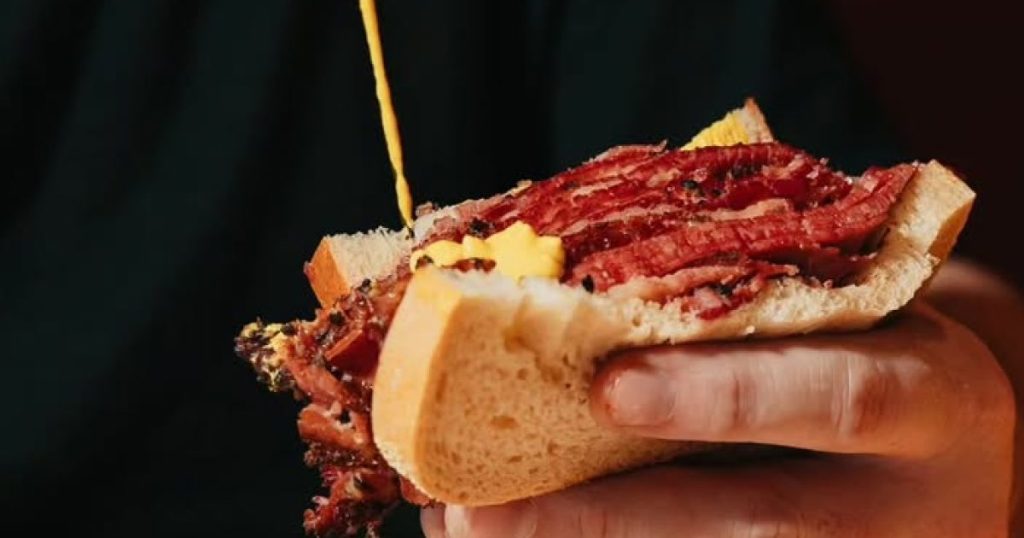
Yellow mustard: Should be your go-to whenever you are dealing with fatty, salty, or heavily seasoned proteins. It is the king of classic deli condiments for a reason; its high vinegar content makes it the only choice for smoked meat, hot dogs, and burgers. It is designed to balance heavy flavors rather than add its own complex spice.
Dijon mustard: It’s better suited for culinary applications where the mustard itself needs to provide a flavor backbone. Use it in vinaigrettes to emulsify the oil, as a rub for a lean roast beef, or in a delicate cream sauce. Because it lacks the high-octane vinegar punch of yellow mustard, it won’t overwhelm lighter ingredients.
Conclusion
The next time you see that bright yellow swipe on your bread, remember that you are looking at a culinary tool perfected over a century. The acidity, the history, and the simple ingredients all work together to make every bite of beef brisket better than the last.
To taste a sandwich where the meat is hand-sliced, and the mustard is applied with tradition in mind, head to Dunn’s Famous, one of the best smoked meat restaurants in Montreal.
FAQs
1. Why is yellow mustard the standard for smoked meat?
It provides a palate reset. The high vinegar content acts as a fat cutter, stripping the heavy oils from your tongue so every bite of brisket tastes as vibrant as the first.
2. What gives yellow mustard its bright color?
Turmeric. Beyond the iconic neon glow, turmeric adds a subtle, earthy base note that anchors the sharpness of the vinegar and ground white mustard seeds.
3. Why not use Dijon mustard instead?
Dijon uses brown seeds and wine, creating a lingering heat that competes with the meat. Yellow mustard uses mild white seeds and sharp vinegar to highlight the smoky beef rather than overwhelm it.
4. Why did delis start using mustard instead of butter or mayo?
Historical Kosher laws forbid mixing meat and dairy (butter) or egg-based products (mayo) in the same meal. Mustard was a delicious, affordable, and dairy-free alternative that became a tradition.
5. Can I use other condiments on a classic Montreal sandwich?
While you can, most connoisseurs advise against it. Ingredients like mayo add heavy fats that mask the complex spices of the meat, whereas yellow mustard is designed specifically to balance them.
You May Also Like
 Know Before You Go
Montreal Hot Dogs and Deli Culture: A Local's Guide to the City's Favorite Comfort Food
 Know Before You Go
Smoked Meat Sandwich vs Club Sandwich: What Is Actually the Difference?
 Know Before You Go
Where to Get the Best Montreal Smoked Meat According to Reddit
 From Tradition to Table