Lorsqu’il s’agit de la viande fumée de Montréal, le débat se concentre toujours sur un facteur : le gras. Le choix entre une coupe maigre ou grasse n’est pas seulement une question de préférence ; c’est un choix qui dicte la transmission chimique de la saveur et la texture du bœuf.
Contrairement aux autres charcuteries, l’âme de ce classique québécois réside dans son persillage. Cet article explore comment la graisse intramusculaire transforme une poitrine de bœuf standard en une délicatesse de classe mondiale, ainsi que les réactions chimiques qui créent sa croûte emblématique
Apprenons-en davantage sur la coupe de viande fumée que vous commandez !
Meilleur Morceau Pour Le Smoked Meat De Montréal
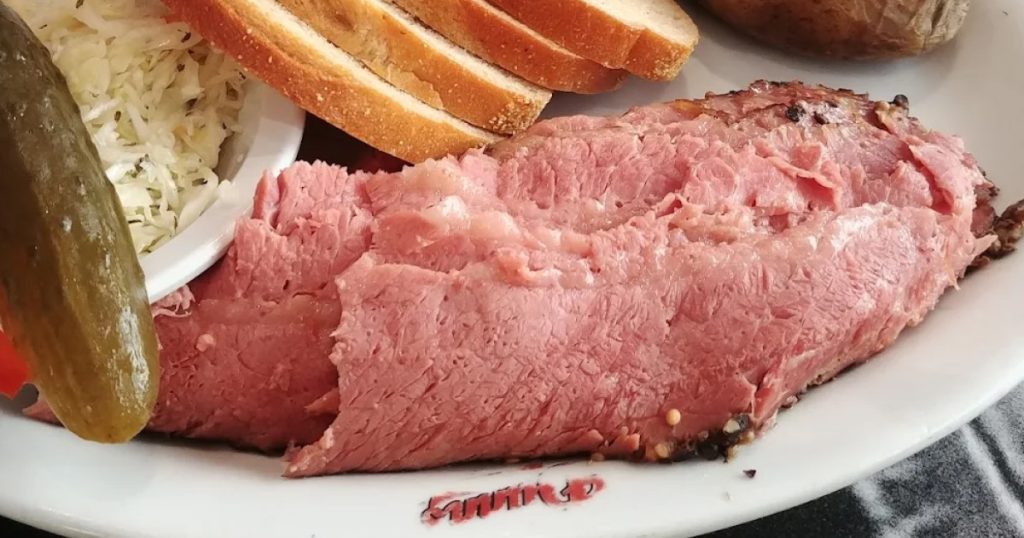
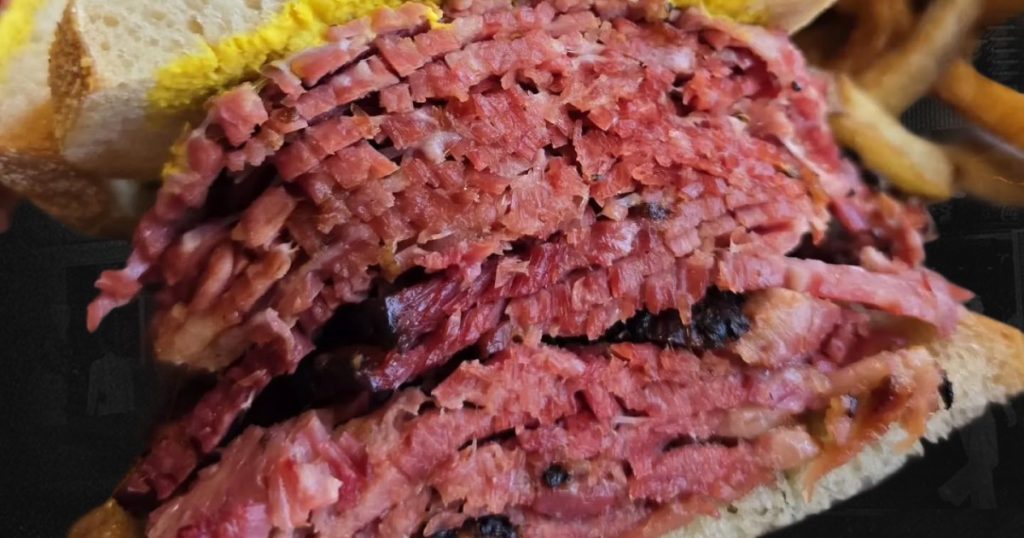
La meilleure coupe est presque universellement reconnue par les experts comme étant la coupe mi-grasse ou mi-grosse. Cette coupe provient du centre de la poitrine de bœuf, précisément là où le « point » (l’extrémité grasse, appelée deckle) rencontre le « plat » (le muscle plus maigre).
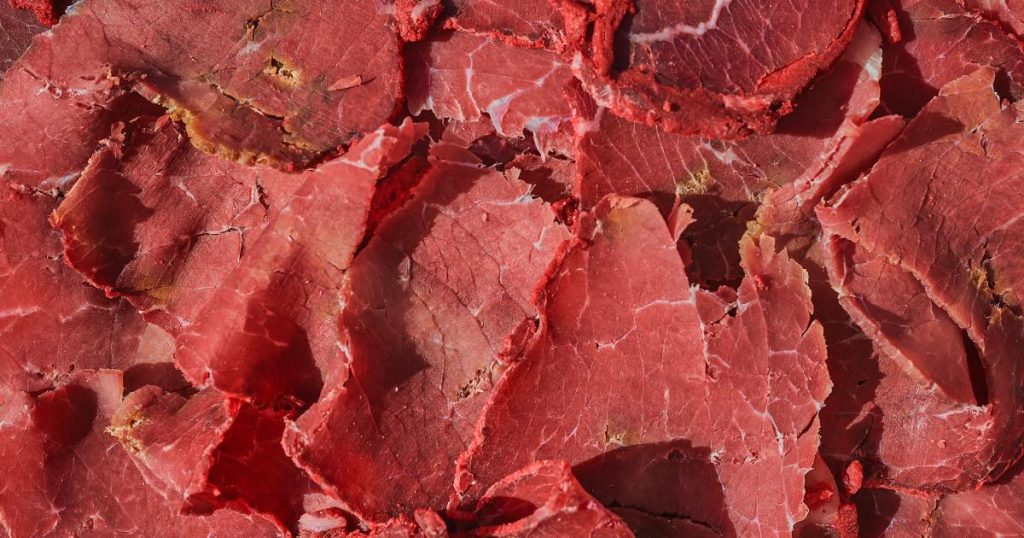
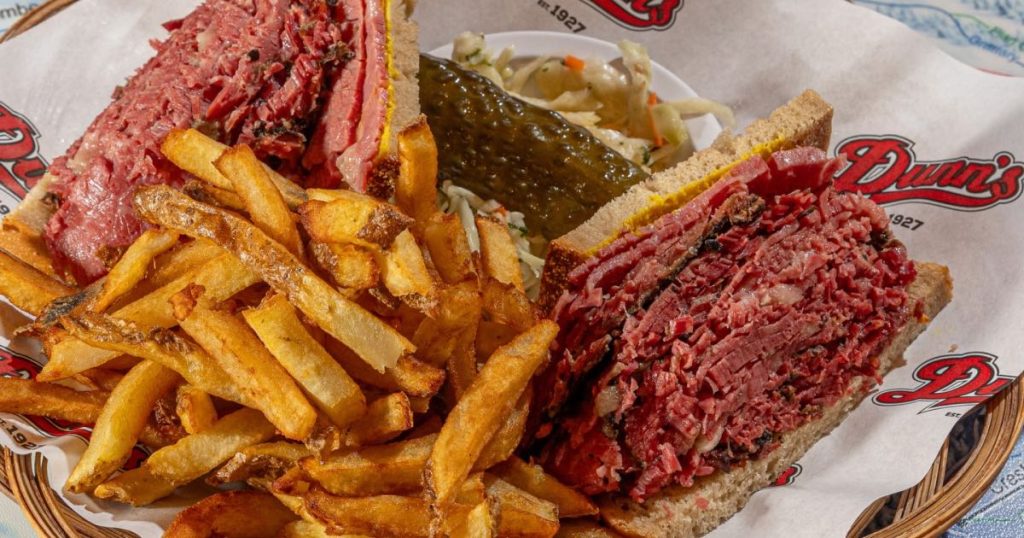
La raison pour laquelle il s’agit du meilleur choix est son équilibre structurel. La partie maigre apporte une texture de bœuf fibreuse et consistante qui maintient la structure du sandwich, tandis que la couche de gras issue du « point » fournit l’humidité nécessaire. Tranchée à la main contre le sens des fibres, cette coupe spécifique garantit que chaque bouchée contient un ratio de 70 % de viande maigre pour 30 % de gras, le ratio idéal qui permet à la viande de fondre en bouche sans être trop grasse.
Persillage Du Smoked Meat : Comment Il Change La Saveur
Le persillage est plus que du simple gras ; il s’agit de la répartition des lipides intramusculaires au sein des fibres musculaires. Dans la viande fumée de Montréal, le persillage agit comme un conducteur rapide des épices. Le mélange d’assaisonnement sec, composé de poivre concassé, de graines de coriandre, de graines de moutarde et d’ail, est soluble dans les graisses.
À mesure que la viande est fumée puis cuite à la vapeur, ces graisses fondent. Cette graisse liquide capture les composés volatils des épices et les transporte profondément au cœur des fibres de la viande. Sans persillage, le centre de la viande reste neutre ou fade. Avec un persillage de qualité, toute la tranche est imprégnée d’une richesse terreuse et épicée. De plus, le gras enrobe le palais, permettant aux notes fumées du bois de se prolonger plus longtemps qu’elles ne le feraient sur une surface sèche et maigre.
Gras Vs Maigre Smoked Meat : Que Choisir
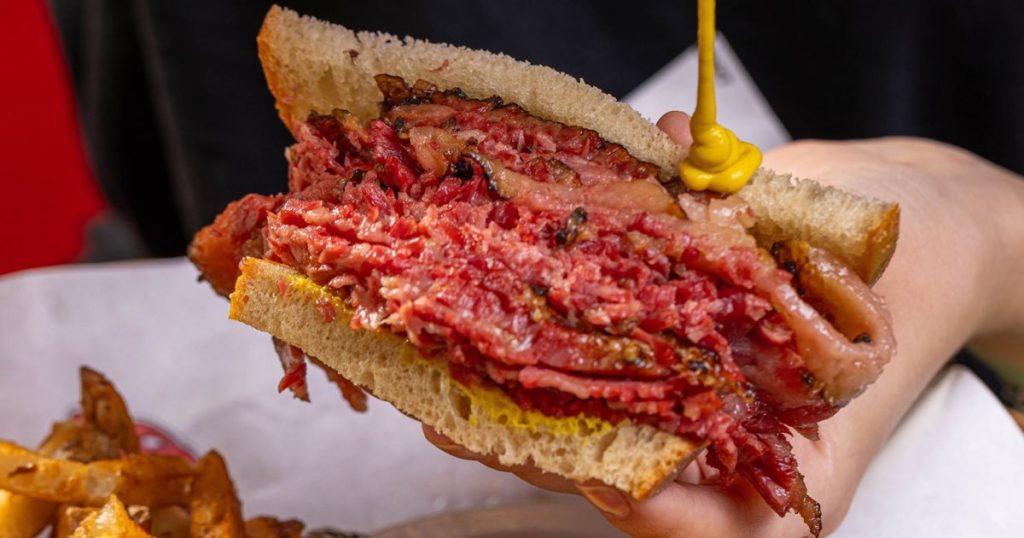
Choisir sa coupe est un compromis entre la santé et l’héritage :
Maigre : Issu du « flat » de la poitrine de bœuf. Il est dense, riche en protéines et offre une saveur de bœuf pure et directe. Cependant, sans le gras pour atténuer le sel, la viande maigre peut souvent paraître plus salée et peut sembler filandreuse si elle n’est pas tranchée très finement.
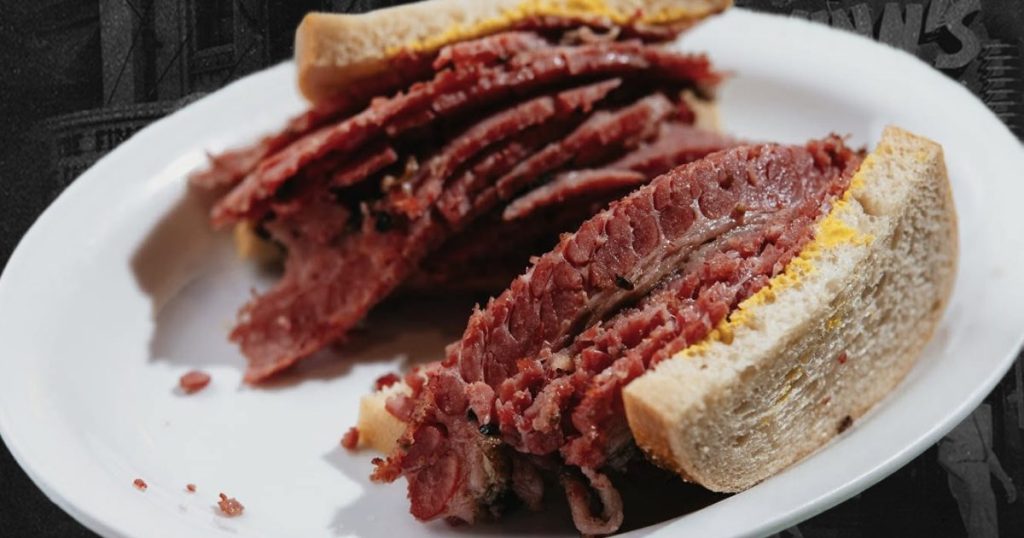
Gras : Issu du « point ». C’est le choix des puristes. Il est incroyablement tendre et riche, avec une texture proche du beurre. La saveur est plus profonde et plus complexe, bien qu’elle puisse paraître lourde pour ceux qui ne sont pas habitués à la richesse du gras de bœuf fondu.
Verdict : Si c’est votre première fois, optez pour la coupe moyenne. Elle offre les bénéfices du persillage qui transporte la saveur sans la lourdeur excessive d’une coupe entièrement grasse.
Secret Du Chef : Réaction De Maillard Vs Oxydation Des Lipides
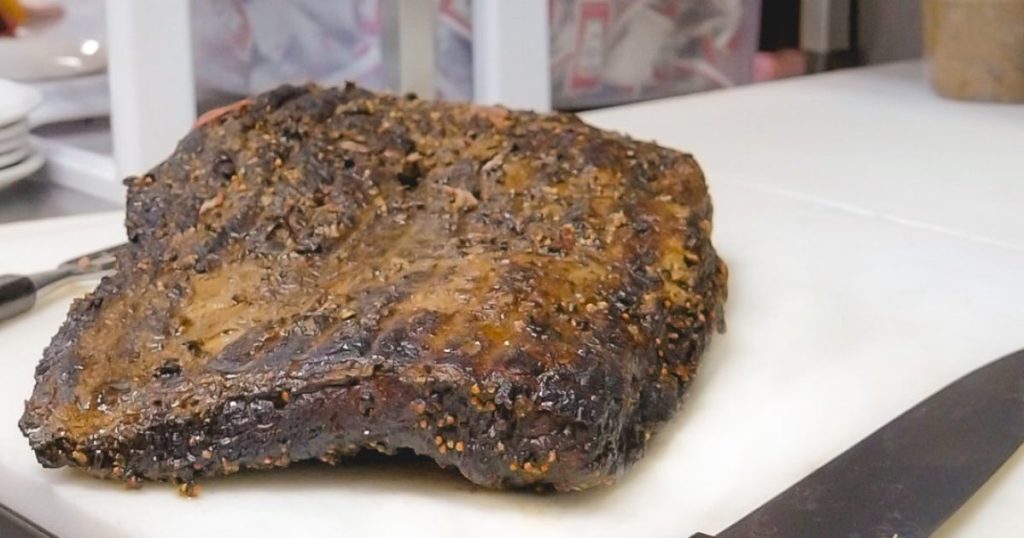
La différence entre une charcuterie médiocre et une charcuterie légendaire réside dans la croûte. Celle-ci est régie par la réaction de Maillard, une réaction chimique entre les acides aminés et les sucres réducteurs qui donne aux aliments brunis leur saveur caractéristique. Lorsque la poitrine de bœuf épicée est exposée à la chaleur sèche du fumoir, la surface extérieure subit cette transformation, créant une croûte savoureuse et croustillante, riche en umami.
À l’inverse, une viande fumée de mauvaise qualité souffre souvent d’oxydation des lipides. Cela se produit lorsque la viande est mal conservée ou réchauffée trop rapidement, ce qui entraîne la dégradation des graisses en composés responsables de goûts désagréables, métalliques ou rances. Un chef expérimenté prévient cette oxydation en utilisant une cuisson à la vapeur longue et douce pour terminer la viande. Cette étape d’hydratation protège les graisses, les gardant douces et savoureuses, tout en préservant la croûte issue de la réaction de Maillard, qui reste intacte et pleine de saveur.
Où Manger Le Meilleur Smoked Meat À Montréal
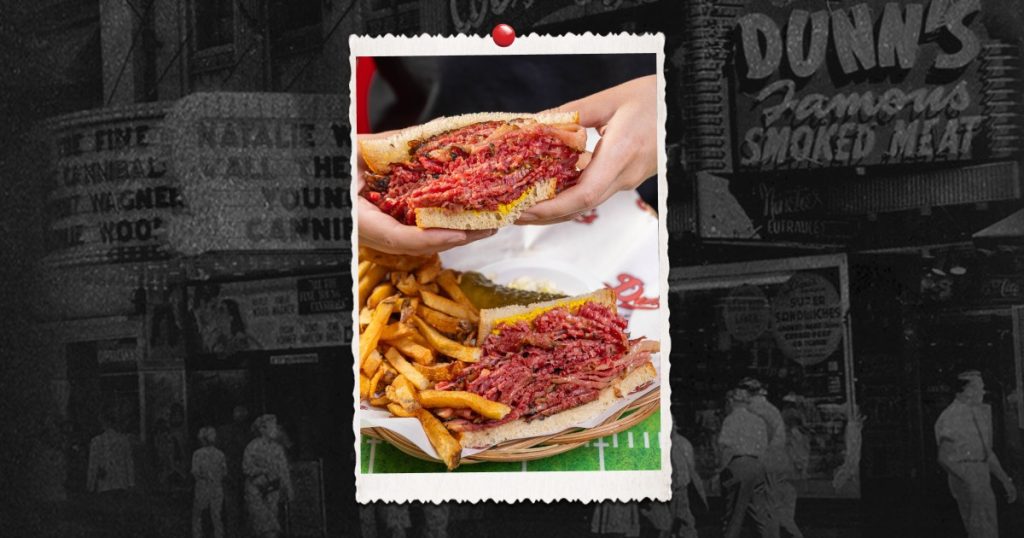
Si vous souhaitez vivre l’alliance parfaite entre le persillage et la réaction de Maillard, il n’existe pas de lieu plus emblématique que Dunn’s Famous. Reconnu comme l’un des meilleurs restaurants de viande fumée à Montréal, Dunn’s est resté le gardien de la méthode traditionnelle montréalaise. Alors que d’autres établissements se tournent vers la production de masse, Dunn’s privilégie toujours les techniques de salaison lente et de découpe à la main qui respectent l’anatomie de la poitrine de bœuf. Notre viande est constamment saluée pour sa température parfaite et l’équilibre délicat de son mélange d’épices, qui n’a presque pas changé depuis près d’un siècle.
Conclusion
La viande fumée de Montréal est une véritable leçon de chimie culinaire. De la manière dont le persillage transporte le parfum de la coriandre jusqu’à la précision de la réaction de Maillard dans le fumoir, chaque détail compte. Ne vous contentez pas d’une imitation sèche et découpée à la machine. Découvrez l’authentique héritage tranché à la main d’un lieu emblématique de la ville.
Prêt pour le sandwich mi-gras ultime ? Rendez-vous chez Dunn’s Famous dès aujourd’hui et goûtez à plus de 90 ans de tradition montréalaise.
FAQ
1. Quelle est la différence entre la viande fumée “medium” et la viande fumée “à l’ancienne” ?
“Medium” fait référence à la teneur en gras, tandis que “à l’ancienne” renvoie généralement au style de préparation, souvent tranché à la main plutôt que découpé à la machine, ce qui permet de préserver le grain naturel de la viande et son humidité.
2. La viande fumée maigre est-elle plus saine ?
Elle est moins calorique et contient moins de gras, mais comme le gras atténue le sel, les coupes maigres peuvent souvent sembler plus salées. Pour obtenir le meilleur équilibre entre nutrition et saveur, la plupart des clients optent pour une coupe mi-maigre.
3. Pourquoi la viande fumée de Montréal est-elle cuite à la vapeur après avoir été fumée ?
La cuisson à la vapeur est l’étape magique. Elle décompose les tissus conjonctifs (le collagène) de la poitrine de bœuf et transforme le gras persillé en une texture gélatineuse qui fond en bouche.
4. Puis-je demander une coupe spécifique au comptoir ?
Absolument. Dans les delicatessens traditionnels comme Dunn’s, vous pouvez préciser maigre, moyen, mi-gras ou gras. La coupe « mi-gras » est largement considérée comme le choix des connaisseurs.
5. Pourquoi la viande est-elle rouge si elle est entièrement cuite ?
La teinte rouge rosé caractéristique provient du processus de salaison. Lorsque la saumure (les nitrates) réagit avec la myoglobine du bœuf, puis est exposée à la chaleur et à la fumée, elle crée une couleur rouge stable qui persiste même lorsque la viande est entièrement cuite.