Pendant près d’un siècle, un arôme particulier a marqué les coins de rue du centre-ville de Montréal. C’est un parfum qui combine la fumée intense du bois dur, le piquant du poivre noir et l’odeur chaude et terreuse du pain de seigle grillé. Pour un habitant, c’est l’odeur du foyer. Pour un visiteur, c’est le premier signe qu’il est sur le point de découvrir une tradition culinaire unique au monde.
La viande fumée de Montréal is a legendary deli staple made from a whole beef brisket that is dry-cured with a coarse spice rub for twelve to fourteen days, hot-smoked to develop a deep flavor profile, and finished in a steamer until it reaches a perfectly tender, melt-in-your-mouth consistency.
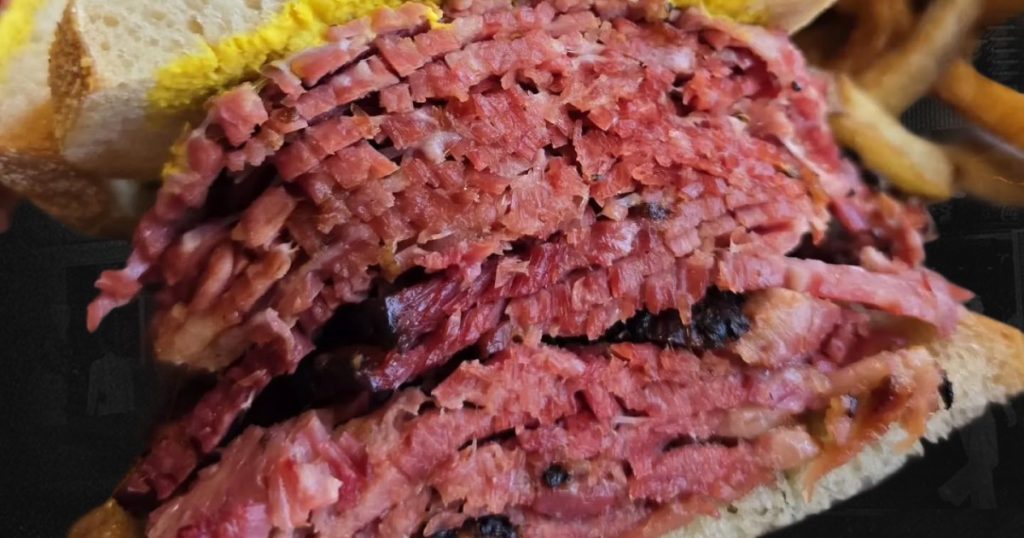
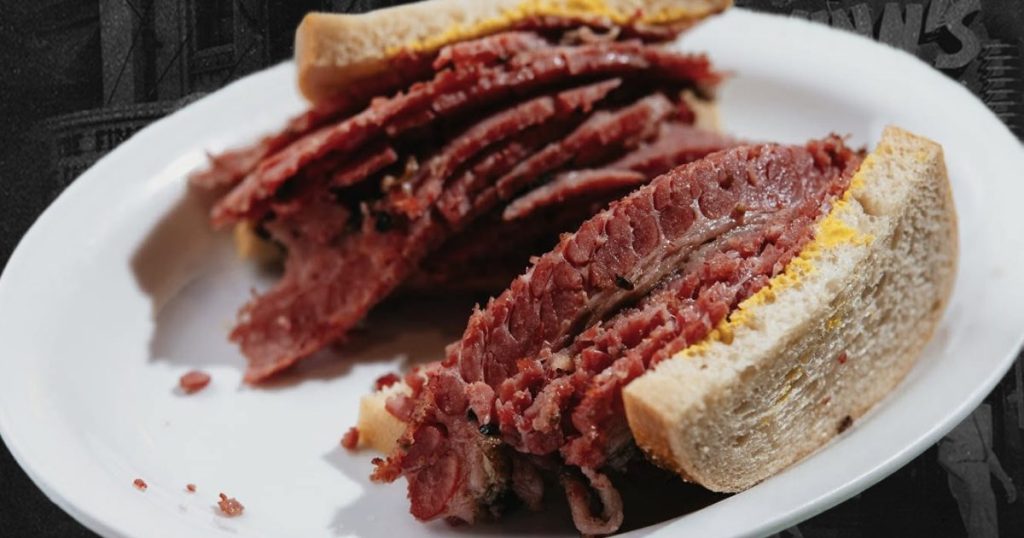
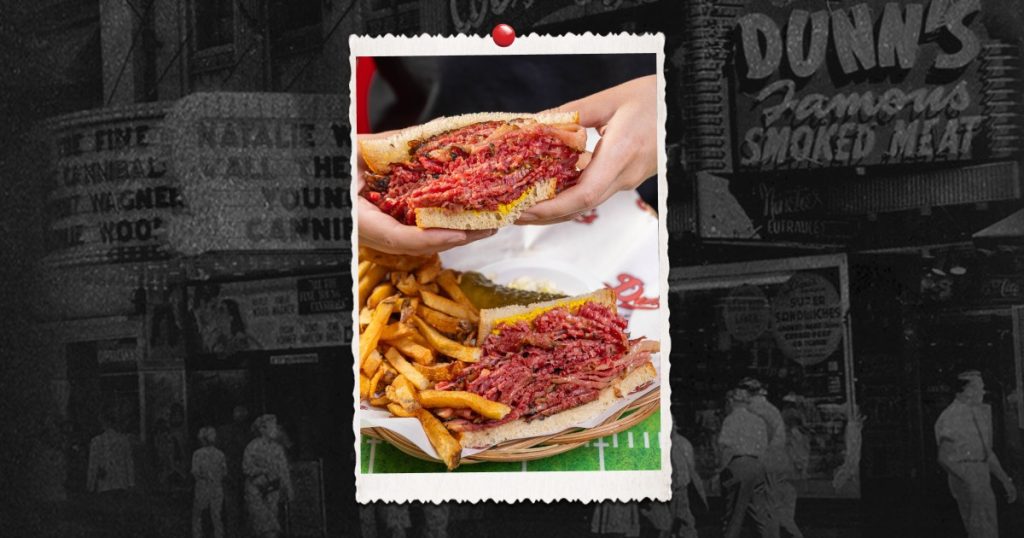
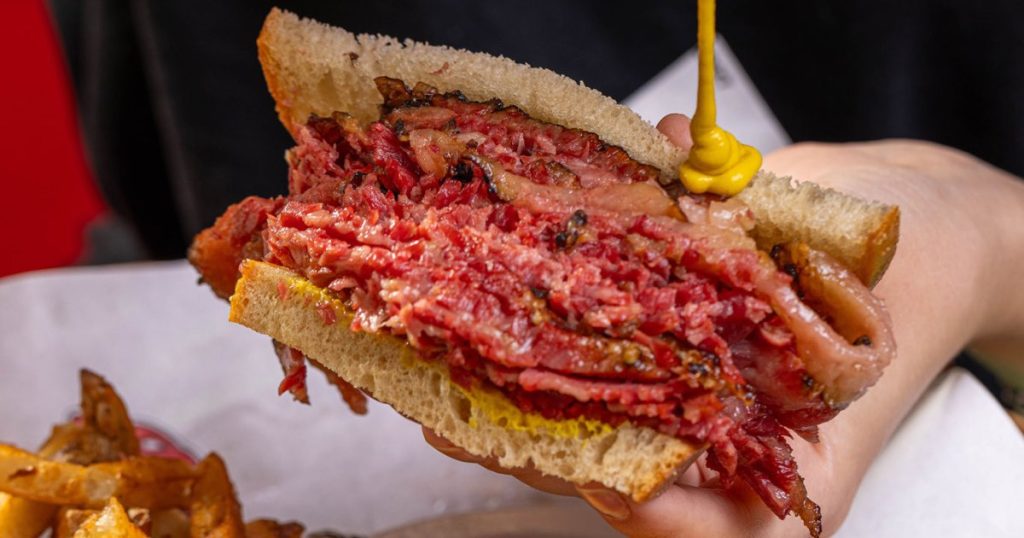
Pour la déguster de manière traditionnelle, elle est généralement servie en sandwich empilé sur des tranches de pain de seigle léger et sans graines, avec une généreuse couche de moutarde jaune. Cette préparation simple permet de mettre en valeur la saveur corsée et poivrée de la viande découpée à la main à chaque bouchée.
La viande fumée de Montréal n’est pas simplement un sandwich ; c’est un travail d’amour qui nécessite plus de deux semaines de préparation. Elle représente l’histoire de la ville, la résilience des familles qui l’ont bâtie et un refus de céder aux raccourcis dans un monde de restauration rapide.
L’Histoire De La Viande Fumée De Montréal
Les origines de ce plat célèbre remontent à la fin du XIXᵉ et au début du XXᵉ siècle. À cette époque, Montréal a accueilli une importante vague d’immigrants juifs en provenance d’Europe de l’Est, plus précisément de Roumanie et de Lituanie. Ces familles apportaient très peu de choses avec elles, mais elles ont transmis les méthodes traditionnelles de conservation de la viande utilisées dans leurs pays d’origine depuis des générations. À une époque où la réfrigération moderne n’existait pas, le sel et la fumée étaient les seuls moyens de garantir que la viande reste sûre à consommer pendant les longs mois d’hiver.
Lorsque ces familles se sont installées dans le Plateau et les environs du boulevard Saint-Laurent, elles ont commencé à ouvrir de petits magasins et des comptoirs de charcuterie. Ce quartier est devenu le cœur de la culture des charcuteries à Montréal. Bien que de nombreux commerçants aient eu leurs propres versions de la viande épicée, le style montréalais a commencé à se démarquer grâce à sa forte utilisation de poivre noir et de coriandre, qui différait des épices plus sucrées utilisées dans d’autres villes.
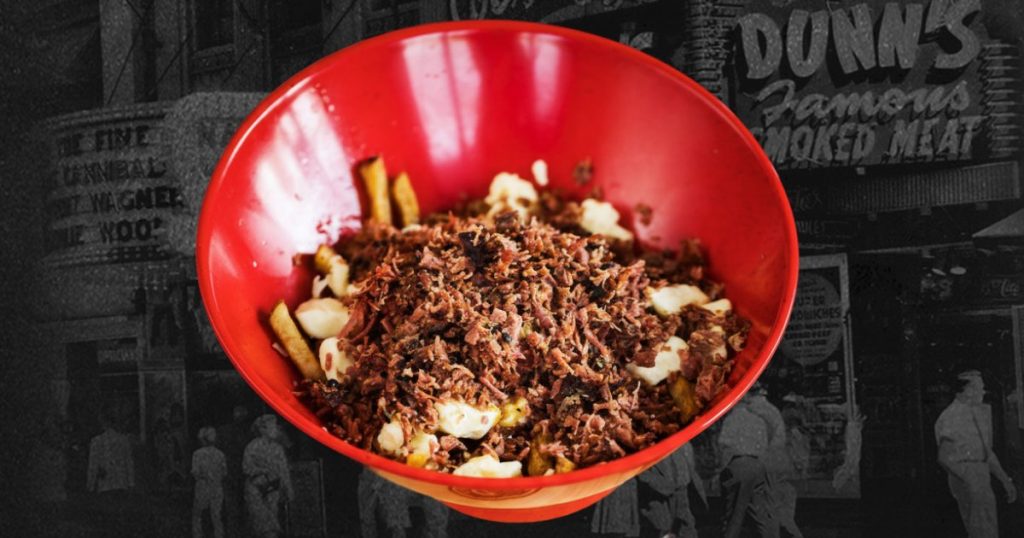
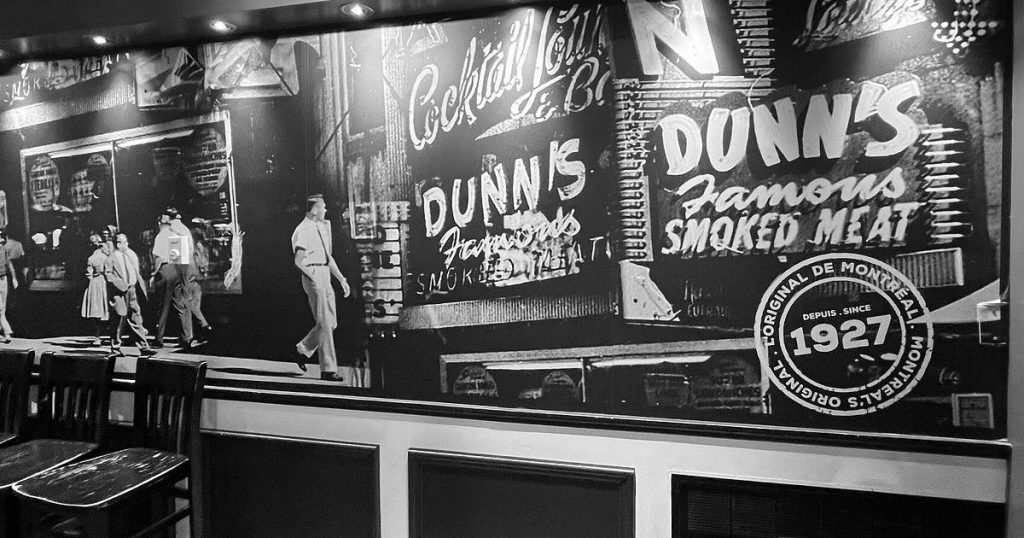
En 1927, Myer Dunn a fondé Dunn’s Famous. C’était un homme qui croyait en l’importance de bien faire les choses, même si cela prenait plus de temps. Il a déplacé son magasin au centre de la ville, contribuant à faire découvrir la viande fumée à un public beaucoup plus large. Grâce à des pionniers comme Myer Dunn, la viande fumée est passée d’un plat réconfortant de quartier à une icône culturelle de toute la ville. Aujourd’hui, elle est reconnue aux côtés du bagel et de la poutine comme l’un des trois aliments essentiels qui définissent l’identité montréalaise.
Montreal Smoked Meat Recipe: How Is It Made?
La raison pour laquelle la viande fumée de Montréal est si spéciale réside dans le fait qu’il est impossible de la précipiter. Le processus est un équilibre minutieux entre chimie et patience.
La Coupe — Pourquoi La Poitrine De Bœuf ?
Dans le monde de la véritable charcuterie montréalaise, la poitrine de bœuf est le seul morceau acceptable. La poitrine provient de la partie inférieure de la poitrine de la vache. Comme ce muscle supporte une grande partie du poids de l’animal, il est naturellement très dur et riche en tissus conjonctifs. Cependant, il est également fortement marbré de gras. Dans la plupart des types de cuisson, la dureté est un inconvénient, mais pour la viande fumée, c’est une exigence. Le gras et les fibres dures sont exactement ce qui permet à la viande de supporter deux semaines de salage et des heures de chaleur intense sans se désagréger ni se dessécher.
La Cure — 10 À 14 Jours
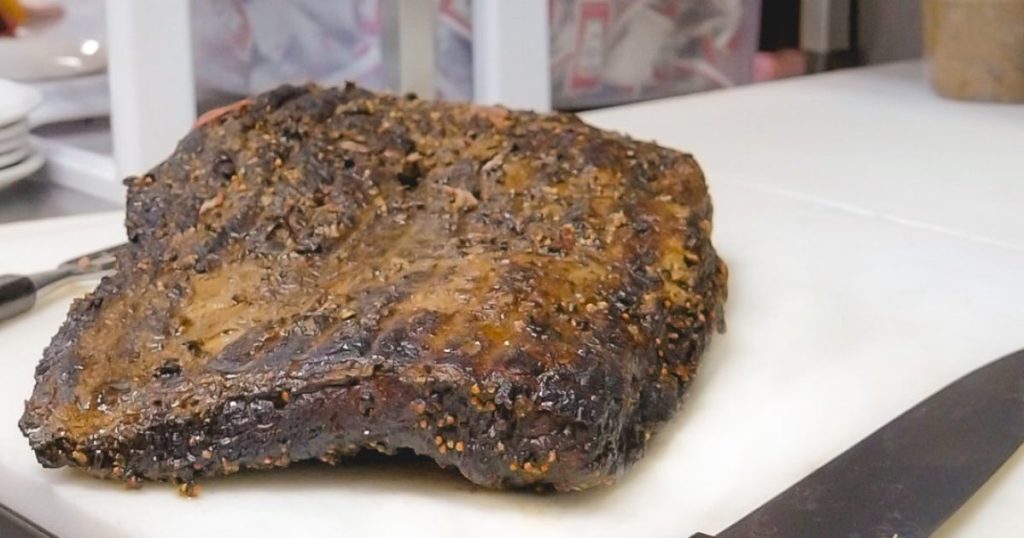
Alors que de nombreuses entreprises de viande industrielles utilisent une saumure liquide, c’est-à-dire tremper la viande dans de l’eau salée pour augmenter son poids et accélérer le processus, une charcuterie traditionnelle de Montréal utilise un assaisonnement sec. Chaque poitrine est frottée à la main avec une épaisse couche de sel grossier et un mélange spécifique d’épices. Ce mélange contient généralement une grande quantité de poivre noir concassé et de graines de coriandre, ainsi que des graines de moutarde, de l’ail et des feuilles de laurier.
La viande est ensuite placée dans une chambre froide pour être salée pendant dix à quatorze jours. Pendant ce temps, un processus appelé osmose se produit. Le sel extrait l’humidité du bœuf, tandis que les épices pénètrent lentement jusqu’au cœur de la viande. Cette longue attente est ce qui crée la saveur profonde et complexe qui traverse chaque tranche.
À lire aussi : La science du salage : comment le temps et le sel créent la viande fumée parfaite
La Fumée
Une fois le salage terminé, la viande est transférée dans un fumoir. Nous utilisons du vrai bois dur pour créer une fumée naturelle qui enveloppe les poitrines pendant plusieurs heures. Pendant la cuisson, une croûte foncée et épicée appelée « bark » se forme à l’extérieur. C’est dans cette croûte que réside la saveur la plus intense. La fumée ne se contente pas de rester à la surface ; elle pénètre les couches extérieures du bœuf, lui donnant cet arôme boisé distinctif qui équilibre le sel et les épices.
La Vapeur — L’Étape Que La Plupart Des Gens Manquent
Beaucoup de gens pensent qu’une fois la viande sortie du fumoir, elle est prête à être consommée. C’est une erreur fréquente. Si vous mangiez une poitrine juste après le fumage, elle serait très salée et extrêmement coriace. Le secret du style montréalais réside dans le processus final de cuisson à la vapeur. Les poitrines fumées sont placées dans de grands cuiseurs à vapeur pendant deux à trois heures. La chaleur humide de la vapeur décompose le collagène et les fibres dures de la poitrine, les transformant en une texture douce et fondante. C’est cette étape qui garantit que la viande reste juteuse même lorsqu’elle est tranchée finement.
Épices Pour La Viande Fumée De Montréal
Ce qui distingue vraiment la viande fumée de Montréal des autres charcuteries comme le pastrami ou le corned-beef, c’est le mélange spécifique d’épices utilisé dans le frottement sec. Bien que chaque charcuterie ait sa propre recette secrète, la saveur est dominée par un profil salé et poivré plutôt que sucré.
Les épices les plus importantes dans ce mélange sont le poivre noir concassé et les graines de coriandre. Le poivre apporte une chaleur vive et persistante, tandis que la coriandre ajoute une note citronnée et terreuse qui équilibre la richesse du gras de la viande. Parmi les autres ingrédients courants, on trouve les graines de moutarde, les gousses d’ail entières, les feuilles de laurier et parfois une touche de clous de girofle ou de flocons de piment rouge pour plus de profondeur. Contrairement à d’autres styles régionaux qui peuvent utiliser du sucre ou du miel, le mélange d’épices montréalais est réputé pour être audacieux, grossier et salé, créant une croûte qui explose de saveur à chaque bouchée.
Tranchage De La Viande Fumée De Montréal
La façon dont la viande est tranchée est tout aussi importante que sa cuisson. Dans une charcuterie traditionnelle de Montréal comme Dunn’s Famous, la découpe à la machine est rarement utilisée. Une machine peut être trop rapide et trop froide, ce qui peut en fait extraire les jus essentiels de la viande chaude et gâcher sa texture.
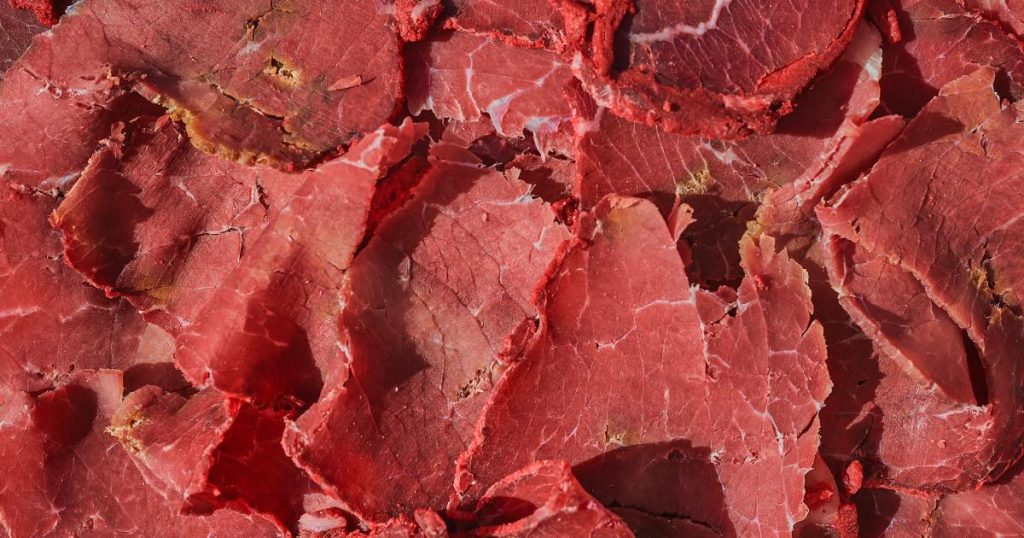
Au lieu de cela, la viande est tranchée à la main par un découpeur expérimenté. Le découpeur utilise un couteau très long et bien affûté pour couper la viande contre le grain. Couper contre le grain est essentiel, car cela brise les longues fibres musculaires, rendant la viande encore plus tendre lorsque vous la mordez. La découpe à la main permet également au découpeur de personnaliser votre sandwich, en choisissant soigneusement un équilibre entre morceaux maigres et gras pour correspondre exactement à votre commande. Chaque tranche est généralement maintenue à environ un huitième de pouce d’épaisseur afin de conserver cette texture fondante caractéristique.
Comment La Viande Fumée De Montréal Est Habituellement Servie
Si vous voulez apprécier la viande fumée de Montréal comme un local, vous devez suivre le style de service classique. L’objectif de la présentation est de garder toute l’attention sur la qualité et la saveur du bœuf.
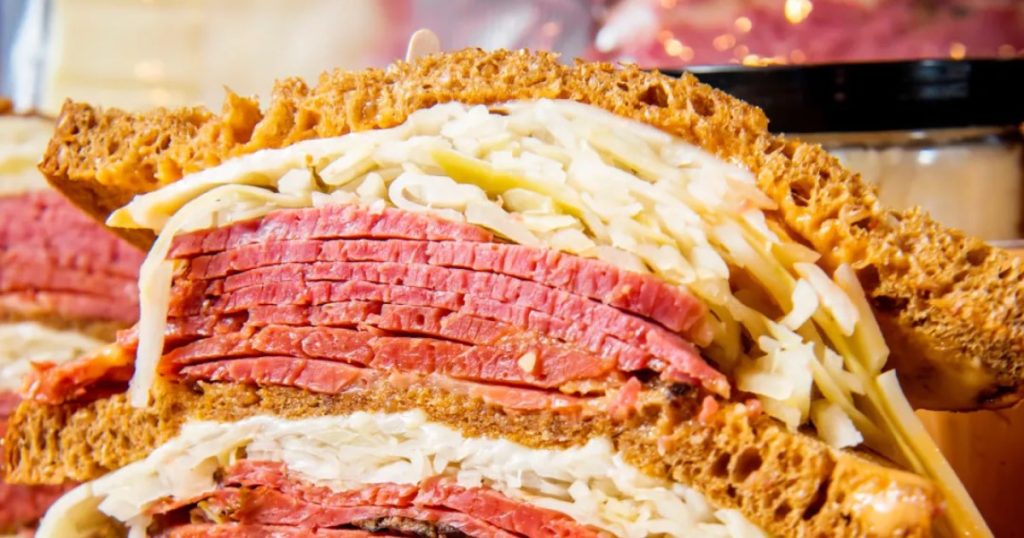
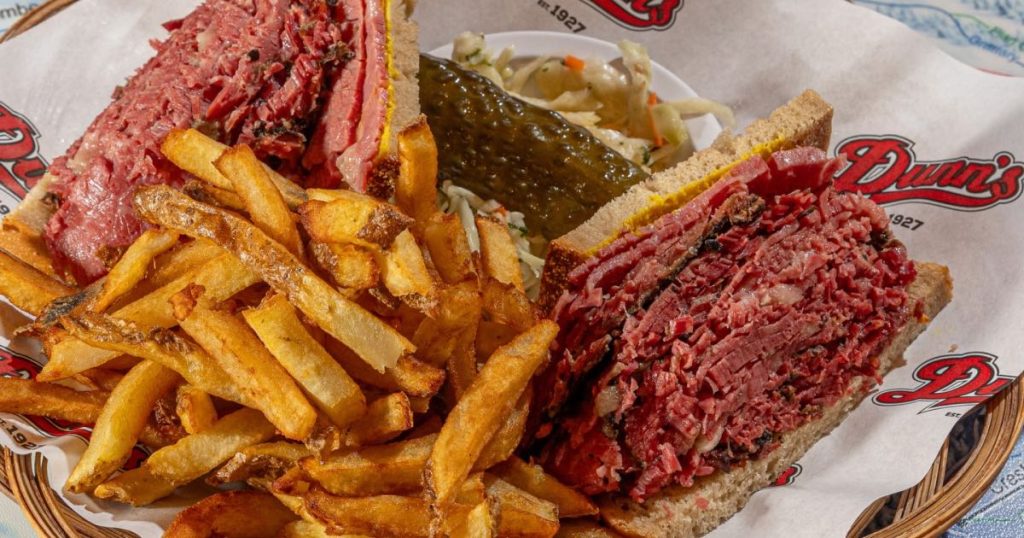
La viande est empilée généreusement entre deux tranches de pain de seigle léger et sans graines. Le pain n’est jamais grillé, car il doit rester suffisamment moelleux pour absorber un peu du gras et du jus de la viande chaude. Le seul condiment accepté est une fine couche de moutarde jaune nature. Vous ne verrez jamais un sandwich traditionnel montréalais servi avec de la mayonnaise, de la laitue, de la tomate ou du fromage.
Pour compléter le repas, il est toujours accompagné d’un grand cornichon au dill acidulé. Beaucoup de gens commandent également une portion de salade de chou crémeuse et une assiette de frites coupées à la main. Pour accompagner le tout, la boisson de choix est un soda à la cerise noire, qui offre un contraste sucré à la viande salée et poivrée.
Viande Fumée De Montréal Vs. Pastrami
Il est très courant que les gens confondent la viande fumée de Montréal avec le pastrami de New York, mais les deux sont distincts. Tout d’abord, le morceau de viande est souvent différent. Bien que les deux utilisent la poitrine, le pastrami est fréquemment préparé à partir du navel, un morceau plus petit et plus gras.
Ensuite, le profil d’épices est un indicateur majeur. Le pastrami a tendance à être plus sucré et inclut souvent des clous de girofle ou davantage de sucre dans le frottement, ce qui lui donne un goût légèrement floral ou à l’ail. La viande fumée de Montréal est beaucoup plus savoureuse et met l’accent sur la chaleur du poivre noir et la note terreuse de la coriandre. Enfin, la méthode de salage diffère ; Montréal reste fidèle à la méthode du frottement sec, tandis que le pastrami de New York est souvent saumurisé à l’eau. Cela confère à la viande montréalaise une saveur plus intense, plus typée bœuf, et une croûte plus foncée.
Viande Fumée De Montréal Vs. Corned-Beef
La différence entre la viande fumée et le corned-beef réside dans les étapes finales de cuisson. Les deux commencent comme un produit de bœuf salé, mais le corned-beef n’est jamais fumé. Il est plutôt bouilli ou mijoté dans de l’eau avec des épices de marinage. Comme il est bouilli, il ne développe pas la croûte foncée et épicée que possède la viande fumée. Le corned-beef est généralement beaucoup plus tendre et salé, tandis que la viande fumée de Montréal offre une saveur plus complexe grâce à la combinaison du frottement sec et de la fumée de bois dur.
Comment Commander De La Viande Fumée De Montréal Comme Un Local
Si vous voulez profiter de la meilleure expérience possible, vous devez savoir comment commander correctement. Dans une charcuterie traditionnelle, la façon dont la viande est tranchée est tout aussi importante que la viande elle-même.
Connaître Votre Teneur En Graisse
Lorsque vous commandez chez Dunn’s Famous, la première chose que le découpeur doit savoir est votre préférence en matière de gras.
- Maigre : Cela provient de la partie plate de la poitrine. Elle contient très peu de gras, ce qui donne une tranche plus ferme et légèrement plus sèche.
- Mi-maigre : C’est la référence pour les locaux. Il s’agit d’un mélange des parties maigres et grasses de la poitrine, offrant le meilleur des deux mondes. La viande est juteuse, tendre et pleine de saveur.
- Grasse : Cela provient de la pointe de la poitrine. Elle est incroyablement riche et presque crémeuse en texture. C’est le choix idéal pour ceux qui souhaitent la version la plus gourmande du repas.
La Construction Classique Du Sandwich
Un vrai sandwich montréalais suit un ensemble de règles strictes. Il est toujours servi sur du pain de seigle léger, fin et sans graines. Vous ne verrez jamais un véritable local mettre de la mayonnaise, de la laitue ou de la tomate sur sa viande fumée. Le seul condiment accepté est une fine bande de moutarde jaune. Cette simplicité garantit que la saveur du bœuf salé pendant 14 jours reste la vedette du repas.
Qu’Est-Ce Qui Rend La Viande Fumée De Montréal Différente ?
Ce qui rend cette viande spéciale, c’est qu’elle est un morceau d’histoire protégé. Dans la plupart des autres endroits, la charcuterie est produite dans de grandes usines à l’aide de machines et d’injections chimiques pour accélérer le processus. À Montréal, nous croyons encore que l’on ne peut pas tricher avec le temps. Le fait que le processus prenne deux semaines est ce qui donne à la viande son âme. C’est une cuisine lente dans un monde rapide. De plus, la tradition de découper la viande à la main est essentielle. Une machine écraserait les jus d’une poitrine chaude, mais un découpeur expérimenté avec un couteau bien affûté peut trancher la viande contre le grain, conservant toute cette humidité dans chaque morceau.
Où Manger La Meilleure Viande Fumée De Montréal
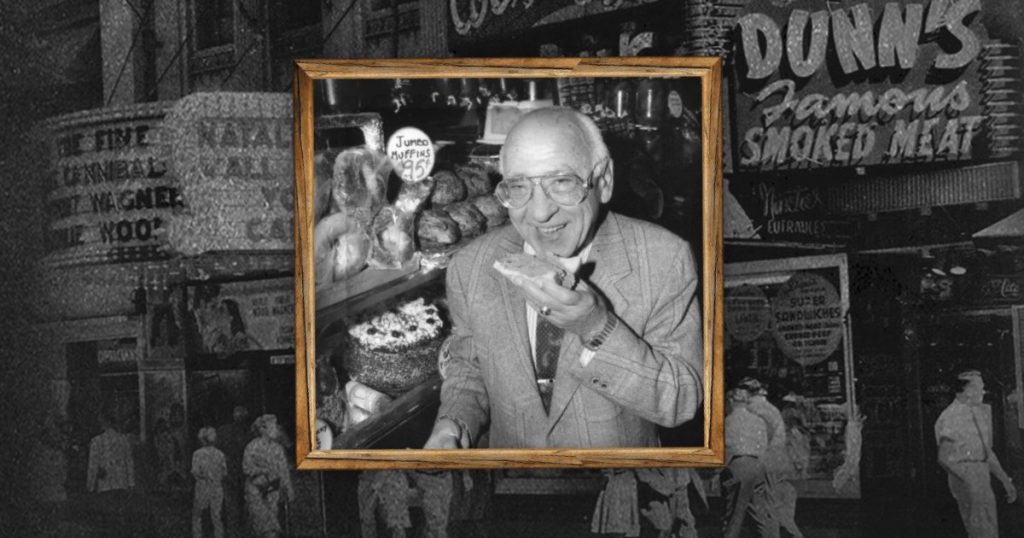
Trouver la meilleure viande fumée à Montréal signifie chercher un restaurant qui respecte les règles à l’ancienne. Vous voulez un endroit où les poitrines sont encore salées à sec pendant les quatorze jours complets et où la viande est découpée à la main à la commande.
Dunn’s Famous est le porte-étendard de la ville depuis 1927. Nous sommes fiers de maintenir vivante la recette originale de Myer Dunn. Que vous visitiez notre établissement phare ouvert 24h/24 et 7j/7 au centre-ville sur la rue Metcalfe ou l’un de nos autres emplacements à Laval, Décarie, Greenfield Park ou St-Eustache, vous bénéficiez de la même qualité qui a fait la renommée de Montréal.
FAQ
Q1. Quel morceau de viande est utilisé pour la viande fumée de Montréal ?
Elle est toujours faite à partir de la poitrine de bœuf, un muscle de la poitrine dur mais savoureux.
Q2. La viande fumée de Montréal est-elle la même chose que le pastrami ?
Non, ils utilisent des mélanges d’épices différents, des morceaux de viande différents et des méthodes de salage différentes.
Q3. Pourquoi n’y a-t-il pas de fromage dans un sandwich à la viande fumée ?
Cela provient de la tradition des charcuteries juives de ne pas mélanger viande et produits laitiers, une règle qui est respectée pour préserver la saveur authentique du sandwich.
Q4. Quel pain est utilisé pour la viande fumée ?
Le pain de seigle sans graines est la seule option traditionnelle utilisée à Montréal.
Q5. Combien de temps faut-il pour la préparer ?
Entre le salage, le fumage et la cuisson à la vapeur, l’ensemble du processus prend environ 14 à 15 jours.
Q6. Puis‑je trouver de la viande fumée de Montréal dans les épiceries ?
Oui, la tradition de Dunn’s Famous s’étend au-delà du restaurant. Vous pouvez trouver nos viandes épicées authentiques, nos cornichons et notre moutarde signature dans le rayon charcuterie de nombreux grands supermarchés à travers le Canada.